Thank you to Julie Thompson Hunter from Tongue Primary School for sharing her learning through this post.
 In 2004, my school took part in a pilot project with the British Film Institute (BFI) and Scottish Screen. We were going to learn about “Moving Image Education” and how to teach it to pupils in primary and secondary school. I remember sitting in the room, waiting for training to start, and thinking, “Oh, no! One more thing to find space for in an already overloaded curriculum!”
And then I saw how easy, fun and multipurpose MIE could be!
 Over the past 15 years, I have been using Moving Image Education (analysing film, creating digital films and animations) in my classroom. It’s highly motivating (don’t take my word for it – find research links at the bottom of the page), it can be used to teach a wide range of reading and writing skills, and it is identified in the curriculum under digital literacy. However, several teachers I have spoken to have said that they don’t use it to teach. So, I wondered, what are the barriers for some teachers in delivering Moving Image (MIE) in primary schools, and how do other teacher overcome them? This created the research question for a master’s work-based project.
Although the sample size was small, the three main barriers that were highlighted were access to resources, lack of training, and rating by teachers of the overall importance of MIE as a part of the curriculum.
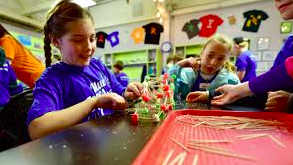 Teachers who overcame these perceived barriers and embedded MIE in their classes used a range of methods: they collected resources from across the school (tripods, cameras, chargers and batteries), and in some cases, brought them in from home. They used film resources online in their classrooms and undertook online training to understand how to teach the skills. Overall, they felt that MIE was a valuable tool in primary teaching of language compared to their colleagues who hadn’t embedded MIE in their own practice.
It sounds like my first thoughts – “Not one more thing!”
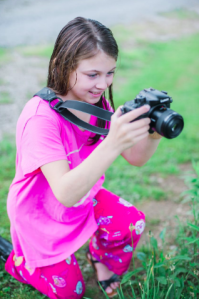 But indulge me. Over the next few months, I hope to produce a series of lesson plans on MIE for teachers to use in their classrooms. Some will be about teaching reading skills, such as inference and critical thinking skills. Others have a cross-curricular theme with modern languages. I also hope to produce a series of short, online videos in how to use cameras, tablets, tripods and editing equipment to create stop-gap animations with your class. Try them!
For those of you who already use MIE in your classroom and want to contribute to the lessons available online, please email me at julie.thompson@highland.gov.uk . And if you have any suggestions, please don’t hesitate to get in touch.
Is it motivating? Check out the research!
https://www.bfi.org.uk/sites/bfi.org.uk/files/downloads/%20bfi-a-framework-for-film-education-brochure-2015-06-12.pdf
http://www.acta.sapientia.ro/acta-social/C6-1/social61-09.pdf
www.bfi.org.uk/sites/bfi.org.uk/files/downloads/film-21st-century-literacy-redefining-film-education.pdf



 HIGHLAND LITERACY