Halloween Writing

If you are looking for a Halloween story to write, look at these two story-journey ideas.

The first story is for children in Primary Two to Four, although Primary Ones could take part in the oral telling and retelling of the rhymes and stories.  This one starts with the nursery rhyme, Two Little Blue Birds and innovates it into Halloween characters as well as moving from poetry to prose and then into non-fiction.

The second one is aimed at children in Primary Four to Primary Seven.  The pack contains two pictures, a model story, and a story journey, but many stories could be written through these pictures.

https://highlandliteracy.com/wp-content/uploads/2023/10/halloween-two-pictures-many-stories.docx

It’s National Poetry Day!

Spark ideas and watch creativity bloom with our free poetry resources.

Featuring great poems around this year’s theme, Refuge, our free resources are full of ways to get students reading, discussing, performing, and writing – no matter their confidence level.

They’re ready to go as worksheets, or you can use them as prompts and thought starters for your class activities.

They’re designed by cross-curriculum experts to be used in all sorts of subject lessons, with materials available all the way from KS1 to KS5.

By engaging your classes with poetry, you’ll give them their own refuge to express themselves and think about the world around them differently.

Here’s where you can find:

Happy National Poetry Day everybody!

Spelling with Morphology and Etymology

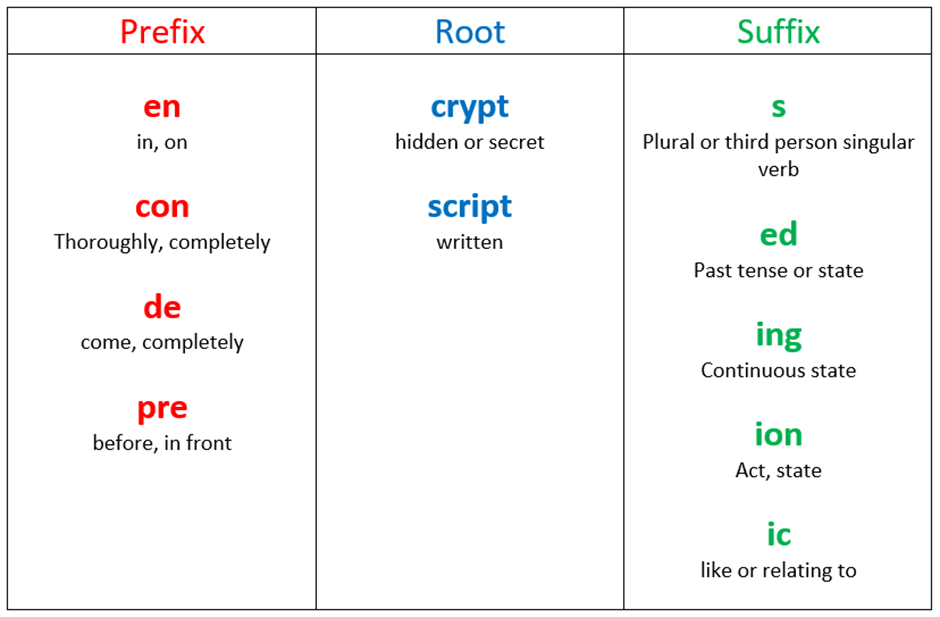
Cryptic words!

Down in the dark crypt, there was an encrypted, cryptic message . This sentence shows an example of polyptoton. Polyptoton, is a rhetorical repetition within the same sentence of a word in a different case, inflection, or voice or of etymologically related words in different parts of speech. It can be fun to think of sentences that use polyptoton, and a great way of understanding how words change as we use them in different ways.

The words crypt, cryptic and encrypt, all contain the morpheme crypt which means hidden or secret.

We are going to look at two commonly confused spellings – crypt and script.

As children develop an awareness of words and the units of meaning within words, it is good to give them then chance to explore related words and their literal or metaphorical meanings.

If you wish to try this out with your class, you can use this information sheet

You can use this in conjunction with the independent group work programme, Pick and Mix, or you may wish to work through the accompanying sheet with your whole class.

Working this way, not only links meaning to spelling patterns, but it also helps readers to understand words that are new to them.

Bookbug and read, Write, Count Bags

The online resources for this year’s P1 Family Bags are now available on our webpage: https://www.scottishbooktrust.com/reading-and-stories/the-bookbug-primary-1-family-bag.

There’s a preview of what is inside the bags, a gifting guide, learning resources and more to come. Please share this webpage with teachers and families so that they can begin preparing additional activities and gifting sessions.

Read, Write, Count Bags

Primary Two

https://www.scottishbooktrust.com/learning-resources/read-write-count-for-p2

Primary Three

https://www.scottishbooktrust.com/learning-resources/read-write-count-for-p3

Emerging Literacy Network 1

Phonological Awareness Assessment

Many schools will now have used the Phonological Awareness Assessment to Screen their Primary One classes.  Others may have delayed screening for a number of reasons and might have questions around using it.

Our first Emerging Literacy Network of this session will take place on Thursday 28th Of September from 15:45 to 17:00. The code to access it is:

https://meet.google.com/czr-xqsg-xip
You are welcome to come along to share your reflections on how the assessments went with other teachers in Highland Council.  We will also share and explore ways in which we can help to support and provide opportunities to develop and strengthen areas of Phonological Awareness.   Networks are a great way to share good practice, so come along with your questions and ideas.

You can post your reflections and pose questions using this Jamboard.

https://jamboard.google.com/d/1xm_-GugF82ri665d5mtuSbmQCqU-TZon2ppLYjKr-0Y/edit?usp=sharing

Spelling with Morphology and Etymology

Geography

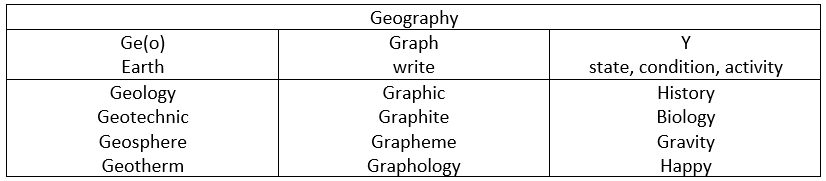
Geography is a subject that we use almost every day of our lives.  Whenever we plan a holiday or even think about how to get to a new place in our town, we are using geography.  Whenever we look for a weather report, we are using geography.  Whenever we look at the landscape around us: trees, rivers, mountains, cities, we are using geography.  We often use words without knowing what they really mean.  This week we are looking at the word Geography and the meaning of the different morphemes in it.

As children develop an awareness of words and the units of meaning within words, it is good to give them then chance to explore related words and their literal or metaphorical meanings.

If you wish to try this out with your class, you can use this information sheet

You can use this in conjunction with the independent group work programme, Pick and Mix, or you may wish to work through the accompanying sheet with your whole class.

Working this way, not only links meaning to spelling patterns, but it also helps readers to understand words that are new to them.

Spelling with Morphology and Etymology

History

As children develop an awareness of words and the units of meaning within words, it is good to give them then chance to explore related words and their literal or metaphorical meanings.

If you wish to try this out with your class, you can use this information sheet

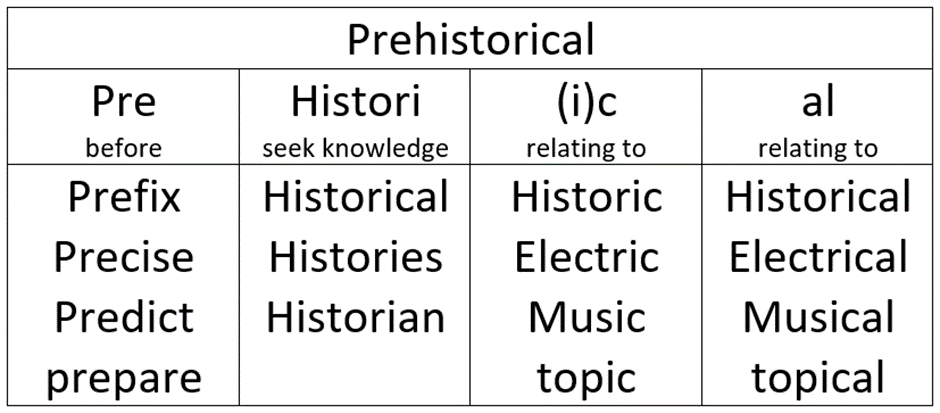
This week we are looking at the words which contain the root histori(y) meaning to know or to seek knowledge.

You can use this in conjunction with the independent group work programme, Pick and Mix, or you may wish to work through the accompanying sheet with your whole class.

Working this way, not only links meaning to spelling patterns, but it also helps readers to understand words that are new to them. This week, we will learn the difference between hist and hyst.

Spelling with Morphology and Etymology

September, October, November, and December

As children develop an awareness of words and the units of meaning within words, it is good to give them then chance to explore related words and their literal or metaphorical meanings.

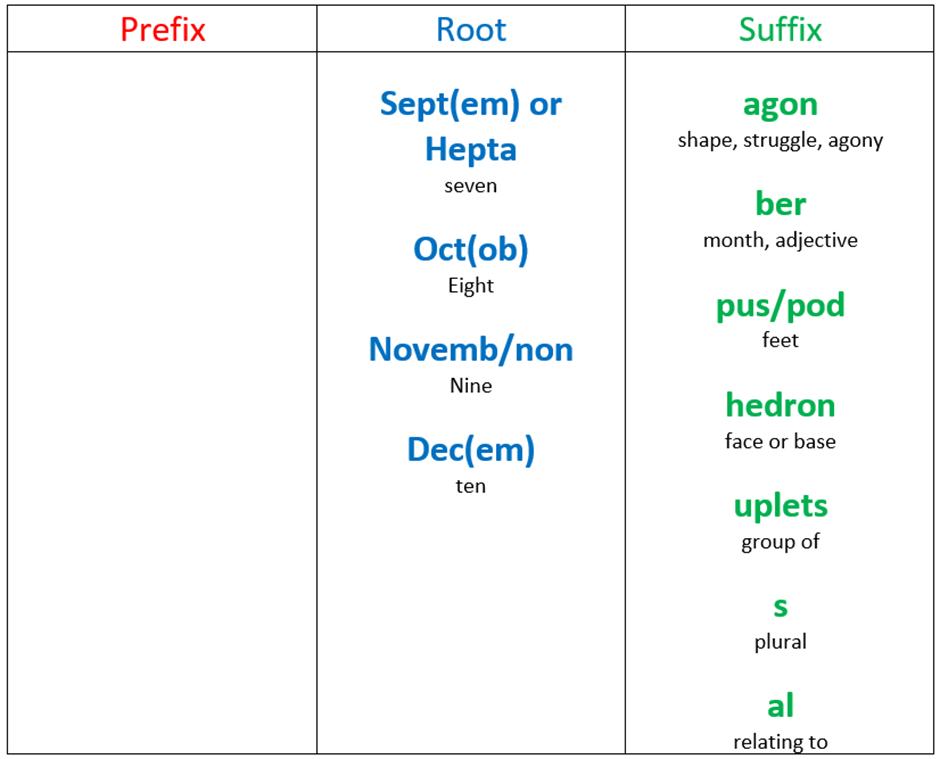
If you wish to try this out with your class, you can use this information sheet.  This week we are looking at the words which contain the root meanings of the last four months of the year.

Why does Sept mean seven and yet September is the ninth month of the year?

Why does Octo mean eight and yet October is the tenth month of the year?

Why does Novem mean nine and yet November is the eleventh month of the year?

And why is the twelfth month, December spelt with Dece, meaning ten?

You can use this in conjunction with the independent group work programme, Pick and Mix, or you may wish to work through the accompanying sheet with your whole class.

Working this way, not only links meaning to spelling patterns, but it also helps readers to understand words that are new to them.

Spelling with Morphology and Etymology

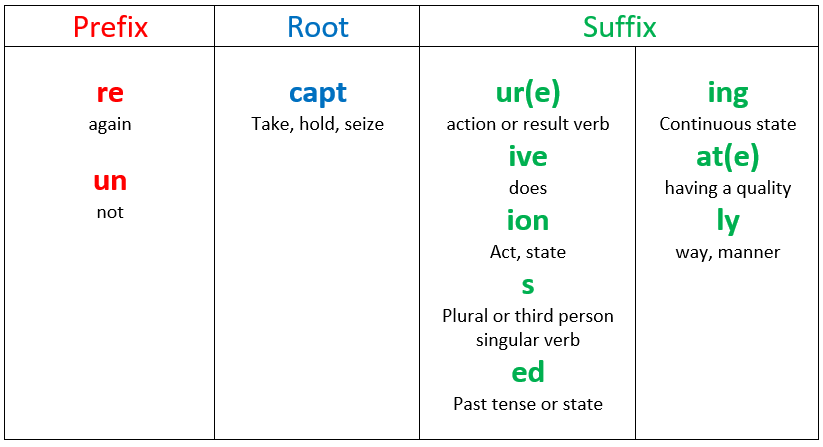
Capture

As children develop an awareness of words and the units of meaning within words, it is good to give them then chance to explore related words and their literal or metaphorical meanings.

If you wish to try this out with your class, you can use this information sheet.  This week we are looking at the words which contain the root capt meaning to take, hold, or seize.

You can use this in conjunction with the independent group work programme, Pick and Mix, or you may wish to work through the accompanying sheet with your whole class.

Working this way, not only links meaning to spelling patterns, but it also helps readers to understand words that are new to them.

Spelling with Morphology and Etymology

Accept, concept, except

As children develop an awareness of words and the units of meaning within words, it is good to give them then chance to explore related words and their literal or metaphorical meanings.

If you wish to try this out with your class, you can use this information sheet.  This week we are looking at the words which contain the root cept meaning to take, hold, or seize.

You can use this in conjunction with the independent group work programme, Pick and Mix, or you may wish to work through the accompanying sheet with your whole class.

Working this way, not only links meaning to spelling patterns, but it also helps readers to understand words that are new to them.