Stanley and Katrina, through their website, publish a Word of the Week on their Youtube channel.
Check it out below:

Stanley and Katrina, through their website, publish a Word of the Week on their Youtube channel.
Check it out below:
Make Beliefs Comix – the online comic design website – has released free e-books that can be used to support the writing process.
The e-books have been designed to support learners to think and write creatively during independent or guided writing.
CLICK HERE – Make Beliefs Comix E-Books
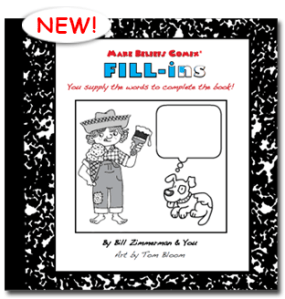
The Make Beliefs Comix FILL-ins book includes spaces for learners to write their own ideas on the interactive text. Click on the image above to access the text.
The British Council have produced a number of resources to help children and young people learn English.
They’ve created a playlist of short stories ideal for independent and shared reading.

Oxfam have a number of free classroom resources that can be used across the curriculum to support the teaching of Literacy through the themes of Global Citizenship and Sustaining our World.
CLICK HERE – Oxfam Education Literacy Resources

Check out their series of lessons and resources entitled ‘Stories from Haiti’. Click the links below to access the relevant resources:
Stories from Haiti for 7 to 11 year olds
Stories from Haiti for 11 – 14 year olds
Following the 2012 Scottish Summary of Literacy and Numeracy, Education Scotland produced materials within a professional learning resource to support practitioners in Listening and Talking, Reading and Writing.
They have highlighted that learners, whatever the text, will need to consciously identify and apply strategies to actively engage in the reading process. They suggest that the following are some of the skills that should be developed before, during and after reading.

One resource that they’ve linked to that develops these strategies is The Thinking Reader.

CLICK HERE for a process description on how to use The Thinking Reader materials.
CLICK HERE for a blank template of The Thinking Reader booklet.
CLICK HERE for an example, kindly shared by Falkirk Council, using ‘Awful Auntie’ by David Walliams that is ready to use.
This post, albeit not solely literacy focused, is intended for all Highland practitioners. At the Head Teacher area meetings last term we shared Education Scotland’s Professional Learning Resource. It was suggested at these meetings that having all of the Significant Aspects of Learning, for all the curriculum areas, housed in one place would be a useful tool.
CLICK HERE Significant Aspects of Learning


CLICK HERE – Education Scotland – Literacy and English Professional Learning Resource
CPD for: P1 Teachers, Primary SMT, Support for Learning Teachers, ASNOs, Educational Psychologists and the Quality Improvement Team
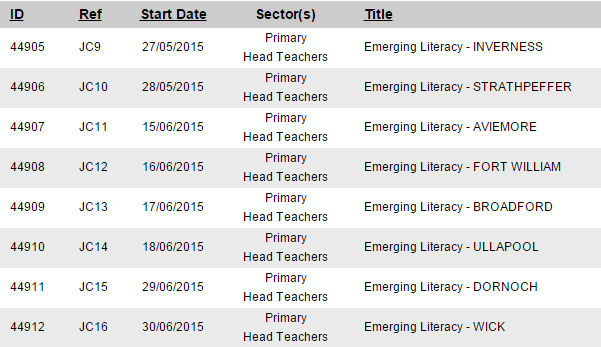
Following the release of the Primary One Literacy Assessment and Action Resource (POLAAR) from Education Scotland in August 2014 we have spent this session testing aspects of the resource in Highland Primary Schools using the Improvement Methodology through the Early Years Collaborative (EYC) and Raising Attainment For All (RAFA) agendas. We’re now in the position where we’re able to offer training in using the POLAAR resource to effectively support Emergent Literacy developments in your school.
On the back of our pilot work, teachers, Speech and Language Therapists, Educational Psychologists and Occupational Therapists have been working on a Literacy Developmental Continuum to support the development of early and emerging literacy within the Early Level and across the school. We will be exploring this in draft form during the twilight session, allowing for practitioners to share their thoughts and early evaluations.
Twilights (4pm – 6pm) will take place over the four areas in eight locations in May and June. Please apply through the CPD calendar by searching for Emerging Literacy.
Please share with colleagues in your school.
Click the image below to access Genre Posters from the Education Scotland website, created by Learning and Teaching Scotland.
As part of the Scottish Book Trust’s ‘Journeys‘ writing competition they have created resources to support children and adults in writing about Journeys.
Click the image below for teaching resources that can be used in Early – Fourth Level.

Where will your class take you?
How are you currently teaching non-fiction text structures in reading and writing?
The video below from the Cult of Pedagogy introduces the concept of text structures:
Key vocabulary and examples of text structures can be found on the link below:
CLICK HERE – Text Structure Vocabulary

Graphic Organizers that can be used to support the teaching of text structures can be found below:
CLICK HERE Text Structure – Graphic Organizers
 HIGHLAND LITERACY