Authors Live – Martin Brown

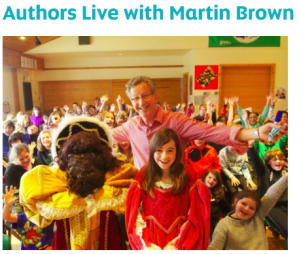
Celebrate 20 years of ‘Horrible Histories’ on Thursday 22nd March 2018, 11am – 11.40am, with the illustrator of ‘Horrible Histories’, artist Martin Brown, as part of Authors Live for P4 – P7 pupils from Scottish Book Trust.

Authors Live sessions can be watched live, or can be accessed in the Watch on Demand section of the Scottish Book Trust website.

After you’ve signed up to join below, you can check-out Martin’s Case Study Package – full of videos, learning resources and book recommendations for Horrible History fans.
CLICK HERE – SIGN UP AUTHORS LIVE: MARTIN BROWN

Date: Tuesday 22nd March 2018
Time: 11am – 11.40am
Target Audience: P4 – P7

Please note that the link to watch is emailed to you manually by one of the Scottish Book Trust team. As this is not an automatic process, please sign up to watch as soon as you can so that they can get your link to you in plenty of time.

Words Up: Early – Level 1

Many practitioners across Highland have attended Words Up: Early – Level 1 training to support adult/child interactoin. The video below has the PowerPoint from the training, alongside the voice of Sharon Smith, Speech and Language Therapist, during one of her training sessions.

We are in the process of creating and will publish a Words Up: Early Training Video which will be able to  be used within settings for in-house training as an introduction or for consolidation after attending Words Up! Early Stage – Level 1 Training.

CLICK HERE: Words Up! Early Key Messages
CLICK HERE: Words UP! Early Primary 1 Videos
Bookbug – Picture Book Donations

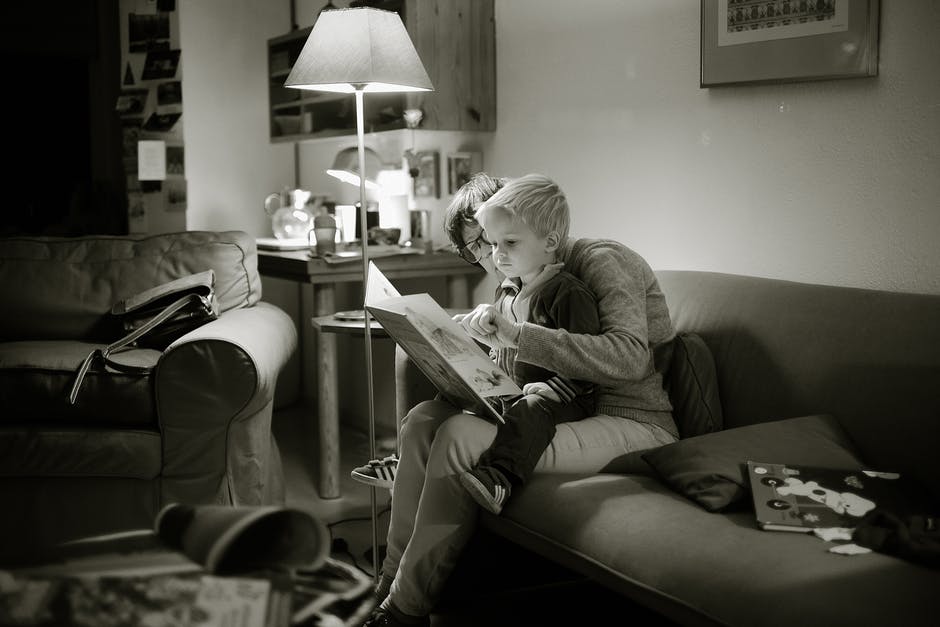
The Scottish Book Trust have picture books available to donate to organisations which are supporting projects which are promoting engagement in texts. This may be of interest to settings that are developing family engagement in early literacy, language and communication.
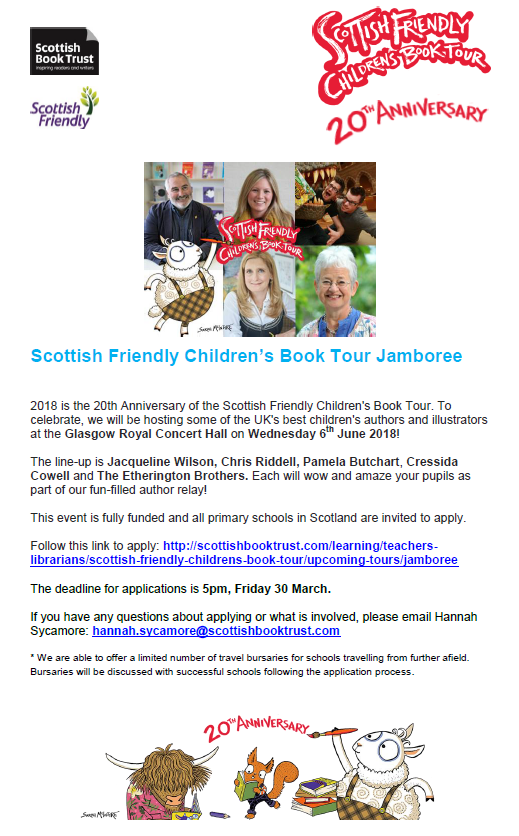
Contact the Scottish Book Trust for more information: info@scottishbooktrust.com

Northern Alliance: Raising Attainment in Literacy, Language and Communication – Interim Report (March 2018)

Today we are pleased to share the progress of the Northern Alliance Raising Attainment in Literacy, Language and Communication workstream. The interim report (March 2018) summarises the progress made in the Northern Alliance Raising Attainment in Literacy, Language and Communication workstream as of March 2018.

Interim Report Summary – Key Points:

From the data collection of a sample of Primary 1 pupils across the Northern Alliance (Sample size: N=2,088 in English Phonological Awareness; N=2,009 in Fine Motor Skills and N=2,035 in Pencil Control/ Pre-writing Skills) in January 2018, it would be reasonable to summarise:

  • Practitioners are paying attention to children’s strengths and gaps in their foundational skills, using the assess-plan-teach cycle to differentiate their teaching and learning to children’s needs. This is evident in the security of earlier skills in phonological awareness and pre-handwriting, as a base to build later skills:
    • In Phonological Awareness, with a score of a possible twelve, only 32% of children from the most deprived areas (SIMD 1-3) had a score of six or more, compared with 54% of children from the least deprived areas (SIMD 8-10), a gap of 22%. By January 2018, there is evidence that the gap is closing in those children scoring six or more out of a possible twelve. In January 80% of children from the most deprived and 94% from the least deprived areas had a score of six or more, a gap of 14%.
    • In Pre-Handwriting, by the end of January almost all children in Primary 1, across each SIMD category linked to deprivation, now have a secure tripod grasp which is foundational to the manipulation of writing implements and are secure in the pencil control concepts which are foundational to handwriting instruction.

From the evaluations of Class Teachers (N=94) and Senior Managers (N=27) during the Emerging Literacy Networks in January 2018, it would be reasonable to summarise:

  • Almost all Class Teachers and Senior Managers have reported that using the Emerging Literacy assessment and planning tools has provided them with information that they would not have had about their children.
  • Almost all Class Teachers and Senior Managers have reported the positive impact of taking a developmental approach to Emerging Literacy on their children’s early literacy, language and communication.
  • Almost all Class Teachers and Senior Managers reported that their knowledge and understanding of the content in the networks was high following the networks, a significant rise from their measure of knowledge and understanding prior to the networks.

From the analysis of the ‘Achievement of CfE Levels’ data for Early Level Literacy in Highland (P1 in 2016/2017), it would be reasonable to summarise:


  • Children in Highland Emerging Literacy Network (ELN) schools outperformed those in non-network (Non-ELN) Highland schools in all three organisers of Literacy – Listening & Talking, Reading and Writing:
    • Children in ELN schools were 30% more likely to attain at least Early Level in all 3 areas, 50% more likely in Listening and Talking, 60% in Reading and 40% in Writing than children in Non-ELN schools.
  • Taking a developmental approach to Emerging Literacy is closing the poverty related gap between children living in the most deprived areas (SIMD 1-3) and children living in the least deprived areas (SIMD 8-10):
    • The most deprived children (SIMD Deciles 1-3) were twice as likely in Emerging Literacy Network schools in Highland to achieve at least Early Level in each area.
    • In the Highland Emerging Literacy network schools, deprived children were much more likely to achieve Early Level in at least one of the three organisers than in non-ELN schools. Overall, 19% of children in ELN schools achieved no level in any organiser as opposed to 46% of children in non-ELN schools.
    • Children in the least deprived deciles did as well or better in Highland Emerging Literacy Network schools, showing that the approach did not “hold them back” in any way.

Interim Report Summary – Future Recommendations:

  1. Now that the Northern Alliance Raising Attainment in Literacy, Language and Communication workstream has been identified as a key workstream in the draft Regional Improvement Collaborative (RIC) plan, an action plan to enable sustainability through the 2018/2019 session and beyond should be created as part of the workstream’s Partnership Group. This should clearly detail the measures which are going to be used to monitor progress over time.
  2. The data published within this report linked to ‘Achievement of CfE Levels’ should be shared to demonstrate the positive outcomes for children. The data is linked to the Scottish Government’s measures within the National Improvement Framework. Due to the sample size of schools who were part of the workstream during the 2016/2017 session, only data from Highland Council could be used within this report. When reporting on ‘Achievement of CfE Levels’ in future reports, data from local authorities across the Northern Alliance should be analysed to support reporting.
  3. To support practitioners, a clear statement as part of the practice guidance should be created to define what it means in practice to effectively take a developmental approach to Emerging Literacy; this should be created with practitioners, for practitioners.
  4. Practitioner collaboration is at the heart of the workstream. The 2018/2019 plan should detail how practitioner collaboration will be strengthened to support those not yet and those at an early stage of taking a developmental approach to Emerging Literacy, whilst continuing to empower those who are confident in their approach.
  5. There are identified resource gaps in Oral Language, Pre-Handwriting and Working Memory/ Executive Functions. As is current practice and as is planned, resources should continue to be created with practitioners for practitioners and delivered through collaborative networks.

CLICK HERE – NA RAILLC Interim Report (March 2018)

Literacy Learning and Interventions Resources: Reading

Jenny Wilson, Literacy Development Officer, has added a number of resources to the reading area of the ‘Supporting learners with Persistent Literacy Difficulties‘ tile. These materials include resources to support planning for learning, teaching and assessment at Wave 1 of the three wave model.

Click the image below to access the ‘Literacy Learning and Interventions Resources: Reading

World Book Day – Thursday 1st March 2018

World Book Day – Thursday 1st March 2018

The annual celebration of the world’s love for books, Word Book Day, takes place this week on Thursday 1st March 2018. The World Book Day Website is full of brilliant ideas to support Early Learning and Childcare (ELCC), schools and partners in supporting World Book Day.


For age/stage specific resources, click the images below:

Let us know what you’re up to on World Book Day by leaving a comment; we’d love to share the work that you’re doing!