Child Poverty, Health and Wellbeing

cphwb

The Closing the Gap agenda in Scottish education aims to ensure that children and young people, regardless of their socio-economic background have an equitable chance of achievement.

CLICK HERE – National Improvement Hub: Approaches to Closing the Gap

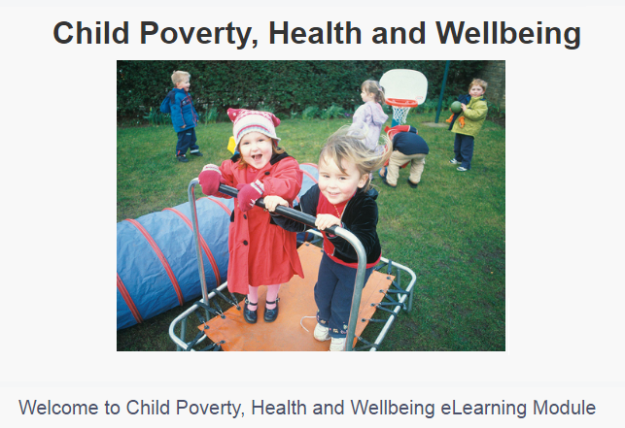
To support our understanding of Child Poverty, Health and Wellbeing take a look at NHS Health Scotland’s new e-Learning module on Child Poverty, Health and Wellbeing  aimed at individuals working with children. It highlights how poverty can impact children and young people, looks at causes of poverty and explores how you can help tackle these issues.

To sign up and access the module, click the link below:

CLICK HERE – Child Poverty, Health and Wellbeing

Little Free Library

Back in May we posted a post on Adult Learning in Highland.

As part of Family Learning, Quality Indicator 2.5 within How Good Is Our School (4th Edition), schools are encouraged to actively promote lifelong learning, both in families, and as individual learners.

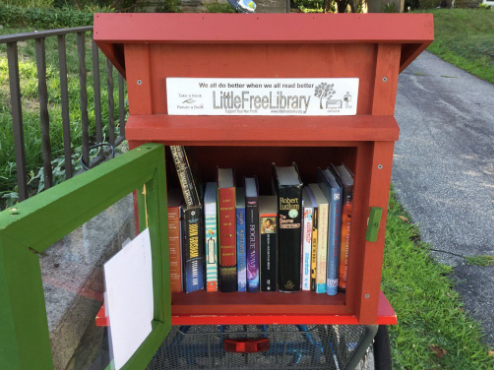
One suggestion we liked was having an area within the school or school grounds to have a ‘Little Free Library’, an area where families could drop off and pick up books to promote reading in the home.

Courtesy of @mandosally on Twitter

Courtesy of @mandosally on Twitter

rwcThe Read, Write, Count website also has a number of suggestions for families on developing literacy and numeracy in the home.

We’d love to hear what you’re up to in promoting family learning in literacy. Leave a comment to let us know.

Authors Live: Lauren Child

lcDo any of your children or young people in P5 – S1 read the Ruby Redfort series? As part of Book Week Scotland this week author Lauren Child will be speaking about her popular Ruby Redfort series, including the most recent title in the series Blink and You Die, as well as answering questions about her writing from pupils around the country.

The Ruby Redfort series is about Ruby, a thirteen-year-old code cracking secret agent school pupil.

rr

Date: Thursday 24th November 2016
Time: 11am – 11.40am
Target Audience: P5 – S1

CLICK HERE – Authors Live: Lauren Child

Wonderopolis – A Wonder A Day


Thank you to Smithton Primary School for sharing the link to this resource.

wonderopolis

Wonderopolis is great site for developing Literacy, Language and Communication. Click the image above to access the site.

Each day comes with a new ‘wonder’, covering a multitude of topics. Each wonder is presented with ‘Wonder Word’ vocabulary relevant to the topic.

The passages that come with each wonder could be used as a stimulus for a shared or independent reading session that could be used to teach Higher Order Thinking Skills. Check out the Higher Order Thinking Skills tab for resources which can be used to support you in developing higher order thinking skills within your classroom.

When exposing learners to the vocabulary within the passages you could use the Building Vocabulary for Better Literacy materials to tier the vocabulary which would be ‘just right’ for using the Pre-Teaching Vocabulary approach.

Book Week Scotland – Reading Dares

readingdaresDuring Book Week Scotland, Monday 21st – Sunday 27th November, Scottish Book Trust dare children/young people, their families and YOU to read . . . with a twist.

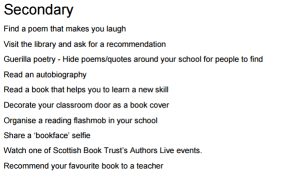
The Scottish Book Trust have created lesson plan resources to support the introduction of ‘reading dares’ for children and young people. The suggested ‘dares’ range from “Pretend to be a famous book character for a day and see if anyone guesses what you’re doing” in the Primary to “Use a quote from your favourite book in everyday conversation and see if anyone notices!” in the Secondary.

primarysecondary

CLICK HERE – Reading Dares for Pupils: Scottish Book Trust

Make it a family affair (including the school family – YES TEACHERS, you can get involved too!) too. There is a great resource for adults to get involved.

readingdare

CLICK HERE – Reading Dares for Adults: Scottish Book Trust

Imagery and Poetry

Are you developing the use of similes and metaphors with learners? Do so through poetry, developing their understanding of the use of imagery.

imagery

Click the image above to access a BBC Clip which analyses the use of similes and metaphors within poetry. You may even find there are a couple of uses with references that allow for a bit of teaching about popular culture of the 90s!

Pen Fifty Words – November 2016

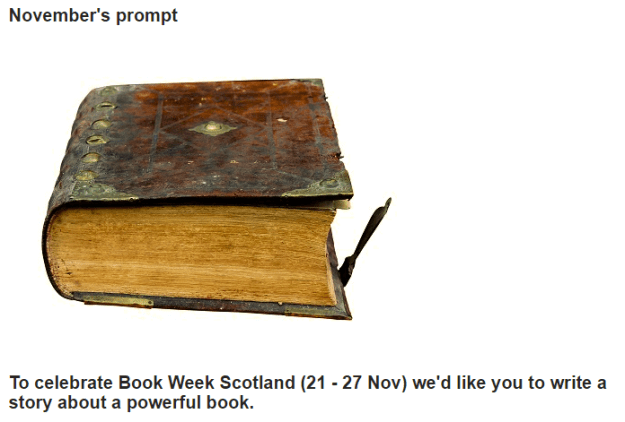
November celebrates Book Week Scotland between Monday 21st – Sunday 27th November.  This month’s ’50 Word Fiction’ from the Scottish Book Trust ties in with these celebrations. This month’s stimulus is a great opportunity for learners to pen a piece of fiction of no more than 50 words on the subject of ‘a powerful book’.

This could be a favourite book, a class novel or perhaps something you’re developing with the First Minister’s Reading Challenge.

book

The deadline is Wednesday 30th November 2016. The Young Writers category is open to all children and young people under 18.

CLICK HERE – 50 Word Fiction (Powerful Book)

Finger Activities – youcubed

On a visit to Marybank Primary School this week a great resource to develop Pre-Handwriting Skills was shared.

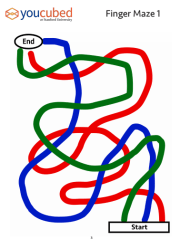
The Finger Training resource from Youcubed is a great resource to support the development of pre-writing and hand/eye co-ordination.

fmsorp


CLICK HERE to download: Finger Training

mbThe resource includes a number of finger activities which are not only beneficial for pre-handwriting but also for visual mathematics.

The resource suggests using coloured dots; however, in Marybank they were using plastic rings instead so that these can be reused. These activities really get the children thinking!

The development of hand/eye co-ordination is crucial to the writing process. This is a great way to support the development of this!

Structuring Your “Primary Literacy Week”

This document has been updated since its initial launch in 2014, making explicit reference to the recent developments in Emerging Literacy and to the benchmarks from Education Scotland.

sylp

When shaping our “Literacy Week” in our classrooms we encompass a wide variety of skills through reading, writing and listening and talking activities.

Many schools and practitioners have developed structures based on an amalgamation of previous Highland guidance, school resources and commercial materials.

The ‘Structuring Your Literacy Programme’ document is one structure which you may find useful to support you in developing discreet literacy teaching within the primary classroom.

CLICK HERE Highland Literacy – Structuring your Literacy Programme