Author Archives: Mr Cook

Wikipedia – A Tool for 21st Century Literacy

Wikipedia – “Love it or hate it Wikipedia is a big part of our lives and its certainly a big part of our online browsing experience. Whether we admit to it or not many people consult Wikipedia on a regular basis to answer their questions. A large part of this is due to the fact that Google loves Wikipedia more than any other site on the Internet. In fact it gets presented as the top search result to more search queries than anything else, even Google itself.” – Ollie Bray

6a00d8341eb53c53ef01b7c702b524970b

When teaching Higher Order Thinking Skills (HOTS), and in particular the skill of critical analysis, websites such as Wikipedia are often hailed as an example of subjective inaccuracy.

However, check out the blog post below:
CLICK HERE – Seven Things You Didn’t Know About Wikipedia

Wikipedia has a number of uses:
– promoting discussion around accuracy and validity – great for Critical Literacy
– providing real-time information – to support Reading for Information/ Shared Reading
– a forum to analyse and evaluate texts – identifying the Writer’s Craft
– access to multilingual language resources – including the Gàidhlig version of Wikipedia
– a tool to support referencing – highlighting the requirement for primary/secondary sources
– a facility to support journaling – a space to pull together relevant articles about a topic
– part of a family of resources – to support literacy across learning in the classroom.

Scots Language – Education Scotland

EdScot

Last week we met with Simon Hall – one of four Scots Language co-ordinators at Education Scotland whose remit covers Highland Council. He wrote the following piece about his time in Highland schools:

“A trip across the Pentland Firth to Caithness is always an exciting prospect, and it was really great to be in the northern county during Book Week Scotland to talk to local teachers and representatives from Highland Council about current developments in Scots Language education.

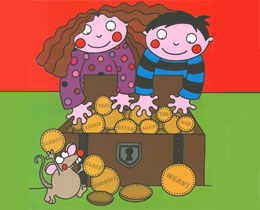
I received a lovely, friendly welcome at the linked primaries of Castletown and Canisbay, where we read ‘The Gruffalo’ in Scots translation. One or two of the bairns here knew some of the Scots vocabulary already, with one lass telling me her mum says her dad has ‘muckle hands’! The learners hadn’t heard the word ‘tod’ for fox before, but some of them did know about a place in Caithness called Todholes. I was learning, too, and picked up a Caithness word – ‘foosome’ – while in Castletown, as well as discovering that the word ‘peedie’, which I had thought was exclusive to Orkney, is also used in Canisbay and the surrounding north coast area.

A question that cropped up once or twice was ‘Is Caithness dialect really Scots language?’ The answer is yes, it certainly is a variety of Scots, and as such it is ideal for exploring in local schools. Primaries from as far afield as Shetland and South Ayrshire are beginning to consider the possibility of teaching Scots as the L3 within the government’s new 1+2 Languages framework.

Next stop was Thurso High, where English teacher Julie Adams showed me a fantastic resource she has been using: a ten volume Scots Dictionary. Ms Adams’ S1 pupils were enjoying exploring the dictionary, and were amazed to discover that it has over 60,000 entries. I had a long and interesting discussion with Craig Omand, D.H.T. at Thurso High, about Caithness language and culture, and about the new S.Q.A. Scots Language Award http://www.sqa.org.uk/sqa/70056.html.

I do hope that Highland secondary schools will give the Scots Language Award serious consideration: it offers a good opportunity to provide additional breadth of learning in the Senior Phase, as well as tapping fruitfully into the local culture of our school communities. The Award provides natural opportunities for interdisciplinary learning involving English, Music, Drama or Social Studies. Mr Omand gave me another Caithness word before I left – ‘raxter’. I’ve had a look at the new online Dictionary of the Scots Language to find out exactly what this one means: http://www.dsl.ac.uk/.

My Friday visits were in Wick, where I had lovely fish and chips and a tour of Pulteneytown Academy Primary with head teacher Miss Wark. I felt at home here, particularly seeing The Simpsons’ Groundskeeper Willie on the wall declaring ‘I’m fae Orkney!’ Miss Wark tells me that pupils at the new Newton Park school will say they are going ‘up til ae street’ in their new school building – I love these Caithness prepositions, and the unique definite article ‘ae’! Thanks finally to Miss MacArthur at Wick High School for taking a little time out on a busy Friday afternoon to hear about the Scots Language Award, and thank you to all of the teachers who were so friendly during my two days in Caithness.

If Highland practitioners would like to get in touch with me with any questions or comments regarding any of the above, or Scots language education in general, please send me an email at simon.hall@educationscotland.gov.uk .”

We look forward to working with Simon over the coming months. In the meantime, join the Scots Blether on Education Scotland to find out more about Scots Language:

CLICK HERE – Scots Blether

The Learning Zoo

The Learning Zoo, Anne Glennie’s (former Andrell Education consultant) new Literacy consultancy company has arrived.

TLZ


As part of the Reflective Reading CPD, Anne has created an area for practitioners to share resources. Check out The Teaching Trunk for more information.

TTT

As the website has been launched this week, Anne has created a Literacy Advent Calendar in the run-up to Christmas. Check it out each day to see what she has to offer.

TLZ2

Be sure to subscribe to the blog to receive posts as they’re published!

SOLO Taxonomy – A lesson idea . . .

Following Wednesday’s post on SOLO Taxonomy [click link for more details], as promised, a suggested lesson to develop the taxonomy in your classroom. The approach is based on the work produced by Pam Hook, HookED in New Zealand.

Significant Aspect of Learning – Listening and Talking

  • develop and use higher order thinking skills
  • use reading and listening  strategies to understand, analyse and evaluate texts
  • find and use information

Learning Outcome – I am learning how to connect ideas together and describe the connections I have made.

Step 1: View DREAM Animation, found on The Literacy Shed.

Step 2: Use the Bloom’s Question Fans and Viewing Media questions to facilitate the discussion around the text, selecting the main ideas and connect to learners’ own dreams.

Step 3: Main ideas/phrases to be pulled out of the text and written onto blank hexagonal shapes –  CLICK HERE – Hexagon TemplateThis can be done by learners and collated by the teacher, or these concepts can be handed to learners, pre-prepared by the teacher. This is dependent on age/stage of learners. Click the link below for pre-prepared hexagons, created using the Free Hexagon Generator.

CLICK HERE – DREAMS – SOLO Taxonomy Hexagons

Step 4: Learners to independently, or collaboratively, organise the hexagons, joining them together to make connections.

Step 5: Learners should be given an opportunity to share how they’ve connected their concepts with others/ the class – comparing the connections they have made with the connections of others.

CLICK HERE Developing SOLO Taxonomy Example Lesson Plan

If you have used SOLO Taxonomy in your classroom, let us know by leaving a comment.

SOLO Taxonomy – Making Connections

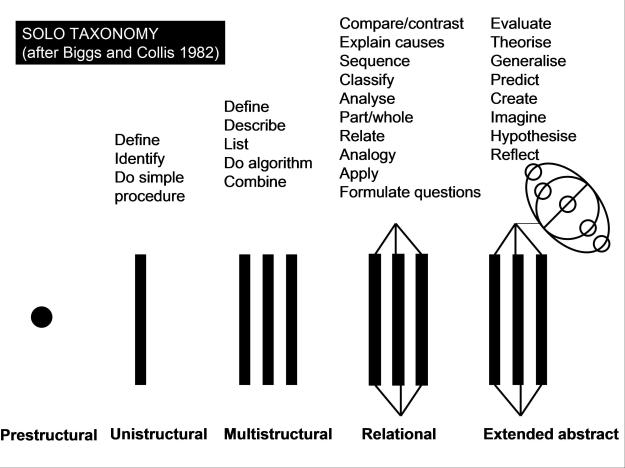
SOLO [Structure of Observed Learning Outcomes] Taxonomy is a concept originally designed by Biggs and Collis (1982) which describes the level of engagement that a learner has with a concept, idea or subject area.

ST

Sourced from: http://pamhook.com/wiki/The_Learning_Process

Learners should be supported to make connections in their learning between texts they’ve read, information they’ve learned and problems they’ve solved.

Pam Hook, HookED, has worked over the past seven years developing the approach in New Zealand schools. To find out more about SOLO Taxonomy, and how it has been developed in New Zealand:
CLICK HERE – HookED SOLO Taxonomy

To learn more about SOLO taxonomy in the UK:
Steven Tierney – SOLO Taxonomy
Argyll and Bute – Solo Taxonomy

SOLO taxonomy is designed to promote depth in learners’ reflections and develop Higher Order Thinking Skills (HOTS).

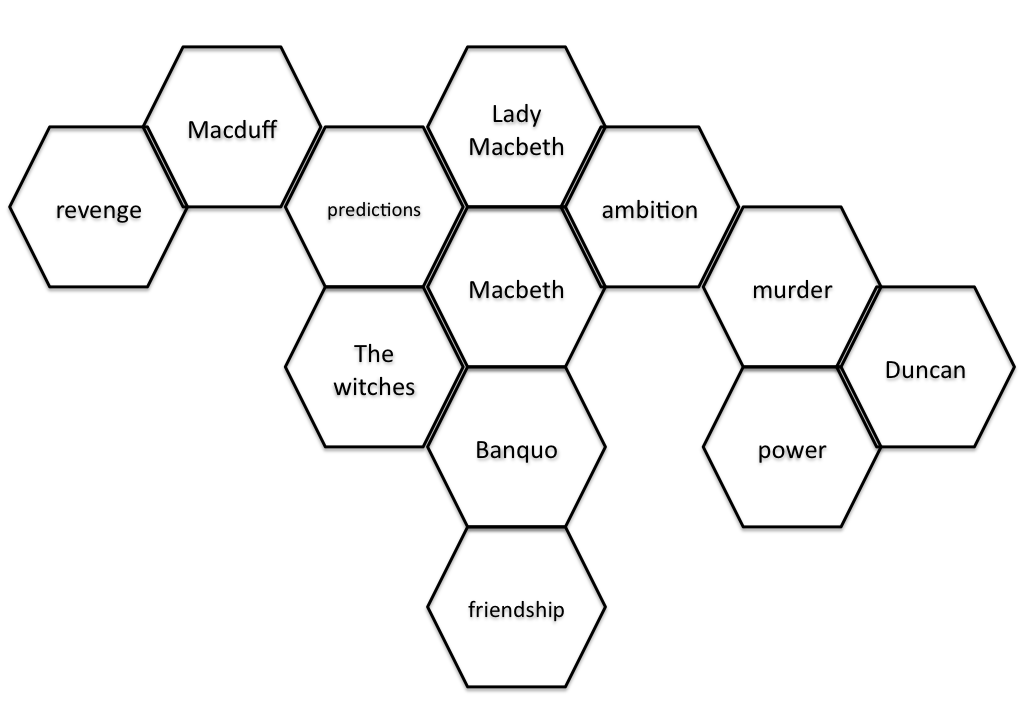
One strategy which can be used to develop SOLO in the classroom is the Hexagonal Approach.

macbeth-2

When reading a text, e.g. Macbeth, learners can be provided with, or pull out, the key information/characters and write these on blank hexagons. Working independently, or collaboratively, learners can then join the hexagons to make connections. It is important that learners are given time to reflect and describe the connections they have made. An excellent task to strengthen listening and talking skills, with the possibility of leading into the creation of texts.

CLICK HERE for a brilliant free resource developed by Pam Hook at HookED. Type in the words/phrases that you want included in your hexagons, and this will generate a document which can be printed out, cut out and organised by learners.

This concept is suitable for First Level, onwards; however, with support, the foundations can be developed in Early Level.

Check back on Friday for an example which you can use to develop SOLO taxonomy in your classroom.

Harriot McDougall Books

A new series of books set in and around Invergarry are being released to support Early/First Level learning experiences in a Scottish context.

HMB

CLICK HERE to check out the Harriot McDougall website where you can find out more about the author, Priya Kharbanda, and the characters she has created.

SD

The first book in the series, ‘Harriot McDougall Goes to the Commonwealth Sports Day’, is accompanied by an educational pack to stimulate discussion and learning experiences around the text. CLICK HERE for details on how to purchase the text. A portion of the proceeds will be donated to UNICEF. CLICK HERE – UNICEF Just Giving

The author is available for storytelling sessions, bringing her books to life. CLICK HERE for Priya’s contact details.

A number of copies have been purchased by Highland Libraries and will be available to lend shortly.

Scots Hoose

A FABULOUS new Scots Language resource has been released.

SH

Scots Hoose is jam-packed with resources to support the teaching of Scots in the curriculum.

CLICK HERE – Scots Hoose

They’ve even got their very own Scots language magazine – SKOOSH! – that learners can contribute to; a great way to encompass purpose and audience into writing.

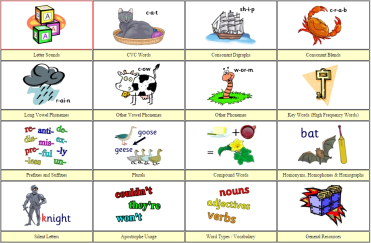
There are far too many individual resources on the website to recommend, instead click on each of the images below to take you to the relevant sections.

1 2 3


45 6

Book Week Scotland – 24th – 30th November

bws-teaser-logo-montage_0

Book Week Scotland takes place between the 24th – 30th November.

The Scottish Book Trust are inviting staff and pupils to make a reading pledge . . . this may be reading a new genre, swapping a book with someone, paired reading with someone else or visiting the local library.

There is an Authors Live Poetry event for P1 – P3 pupils that is happening on Thursday 27th November in addition to National Non-Fiction November taking place throughout November.

Let us know what you’ve got planned by leaving us a comment . . .