Action Aid – Literacy Resources

AAAction Aid have a number of teaching resources for supporting the teaching of Literacy and English through themes of Learning for Sustainability and Equality and Diversity. This is a great way of transferring the skills developed in Literacy and English across the curriculum.

CLICK HERE – Action Aid Literacy
CLICK HERE – Action Aid English

If you’re looking at the refugee crisis as part of your class’ work in the Rights of the Child or Equality and Diversity, I recommend you checking out the following link which has a number of Literacy based resources for Second Level onwards:
CLICK HERE – Action Aid Refugee Crisis

Book Nook for Emerging Literacy

booknook

Book Nook is a great resource which supports the development of emerging literacy skills. The resource supports the development of skills such as Building Vocabulary, Building Sound Awareness and Developing Story Comprehension.tbgg

Every other month a new topic is posted, learning activities built around a children’s picture book.

CLICK HERE to subscribe to their mailing list – that way you’ll get an email each time a new book is posted online.

Check out the following book which develops Concepts of Print with ‘The Three Billy Goats Gruff’CLICK HERE to access this month’s resource.

CLICK HERE for Highland Literacy’s Emerging Literacy Materials 

Exploring Disorders of Language

Thank you to Rebecca Castelo, Speech and Language Therapist, for sharing her summary of the CPD event which was advertised on the blog earlier in the year.

Last week over 100 delegates were gathered to hear Maggie Johnson, Speech and Language Therapist Advisor whose specialism is in childhood communication disorders, speak about disorders of language. The day was highly anticipated and had attracted interest from across Scotland; Maggie did not disappoint.

Maggie has a wealth of knowledge and experience, bringing complex descriptions to life by drawing on real-life examples and scenarios. We heard about how children acquire language, the warning signs for disorders of language and how different diagnoses can overlap. The day was full of new learning and provided lots of ‘food for thought’.

Some of the day’s highlights include:

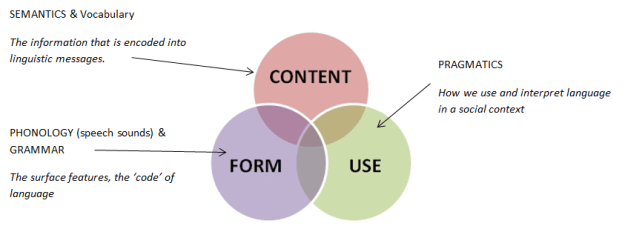
A simple model for the language system required for effective communication (Bloom and Lahey):
salt1

All three areas overlap and interact. For example, the form we use depends on the pragmatics of the situation (e.g. ‘Sit down!’ vs ‘Would you like to sit down?’ – Both have the same meaning, but they each take a different form.)

The development of oral language and phonological awareness

Maggie told of how young babies pick up the syllable structure of their mother tongue and will reproduce this structure in their babble patterns. It was highly entertaining to hear Maggie ‘babble’ in English, Indian and Italian structures.

We heard about how children develop language, and that the development of phonological awareness is linked to underlying oral language skills. Maggie stressed that rhythm and rhyme are early predictors of reading; yet it is possible to speak clearly with no phonological awareness and with little awareness of word boundaries.

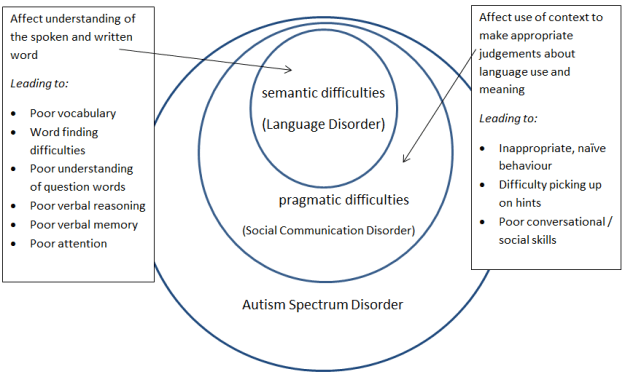
The overlap between semantic difficulties, pragmatic difficulties and autism spectrum condition
salt2

At a classroom level practitioners can support the development of language through engaging with the following materials available on the Highland Literacy Blog:

Taking a developmental approach to Emerging Literacy in Primary 1 (P1)

Building Vocabulary for Better Literacy

Pre-Teaching Vocabulary

Story Pathways . . . Go on a journey!

A Story Pathway is a mode of graphic organiser which can be used to retell familiar stories. Learners draw and/or write the key events from texts in chronological order. Depending on the developmental stage of the learners, you may wish to put signposts along the pathway.

This slideshow requires JavaScript.

The images below show how the Primary 1 children at Milton of Leys have used Story Pathways to retell Little Red Riding Hood. In this example they were supported through shared writing of the beginning and end of the story. The children then collectively retold the middle of the story.

The children can then walk the Story Pathways to retell the story.

CLICK HERE – Fairy Dust Teaching Blog

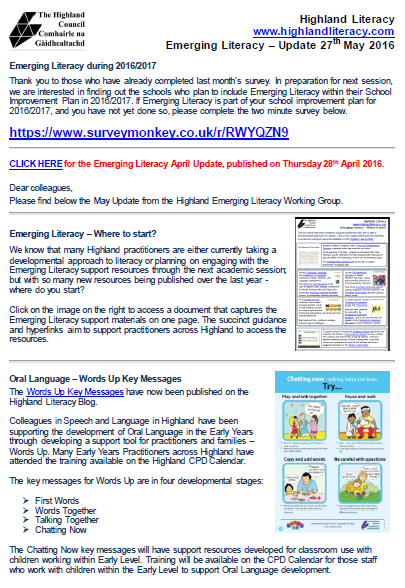
Emerging Literacy – May Update

Emerging Literacy during 2016/2017

Thank you to those who have already completed last month’s survey. In preparation for next session, we are interested in finding out the schools who plan to include Emerging Literacy within their School Improvement Plan in 2016/2017. If Emerging Literacy is part of your school improvement plan for 2016/2017, and you have not yet done so, please complete the two minute survey below.

https://www.surveymonkey.co.uk/r/RWYQZN9

ELMU

CLICK HERE to download the May Emerging Literacy update.

Emerging Literacy – Where to Begin?

We know that many Highland practitioners are either currently taking a developmental approach to literacy or planning on engaging with the Emerging Literacy support resources through the next academic session; but with so many new resources being published over the last year – where do you start?

elwtb

Click on the image above to access a document that captures the Emerging Literacy support materials on one page. The succinct guidance and hyperlinks aim to support practitioners across Highland to access the resources.

Words Up – Key Messages

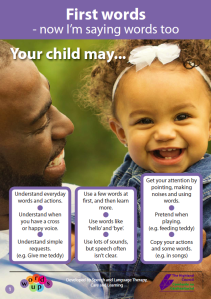
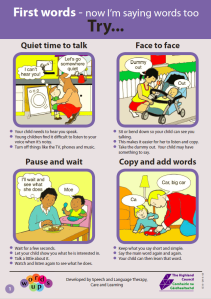
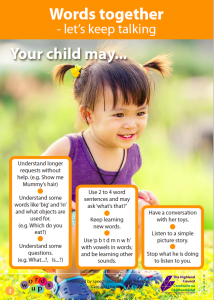
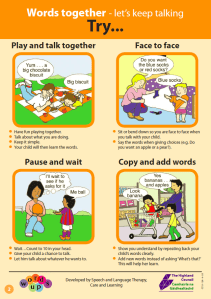
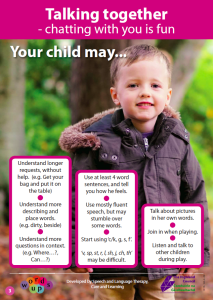
Colleagues in Speech and Language in Highland have been supporting the development of Oral Language in the Early Years through developing a support tool for practitioners and families – Words Up. Many Early Years Practitioners across Highland have attended the training available on the Highland CPD Calendar.

The key messages for Words Up are in four developmental stages:

  1. First Words
  2. Words Together
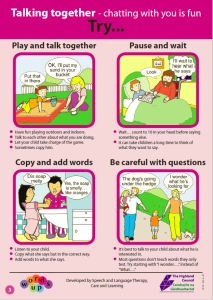
  3. Talking Together
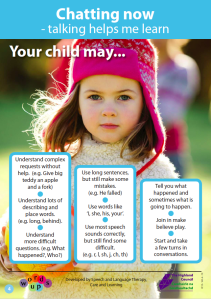
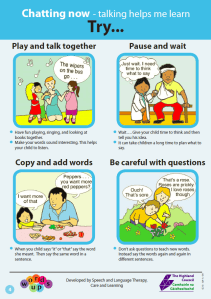
  4. Chatting Now

The Emerging Literacy Group are currently developing Key Messages to support Oral Language in the school years.

You can access each of the Words Up Key Message posters by clicking the images below.

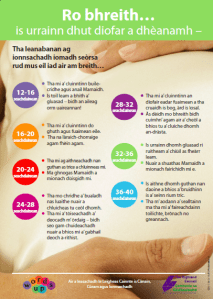
You can access each of the Words Up Key Message posters by clicking the images below. You can also download all of the posters in Gaelic by clicking HERE.

First Words

1-YCM1-KM

Words Together

2-YCM 2-KM

Talking Together

3-YCM 3-KM

Chatting Now

4-YCM 4-KM


DOWNLOAD ALL WORDS UP POSTERS IN GAELIC 


Sarah McIntyre – Author Visit

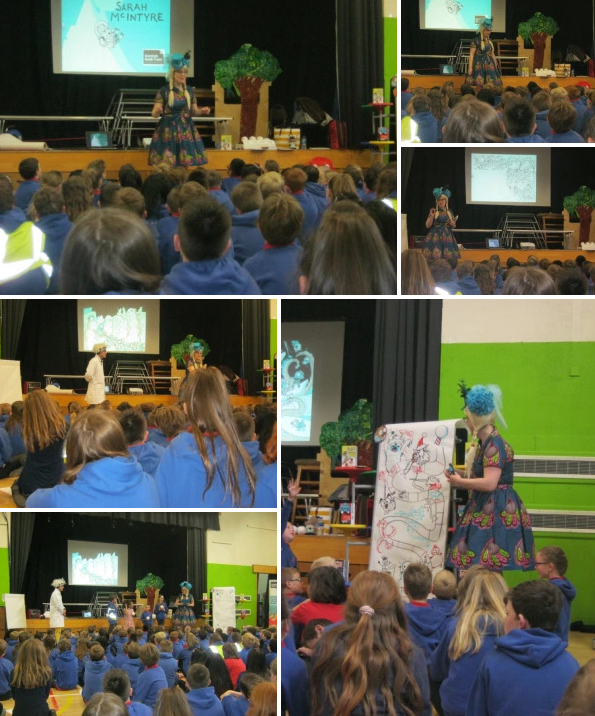
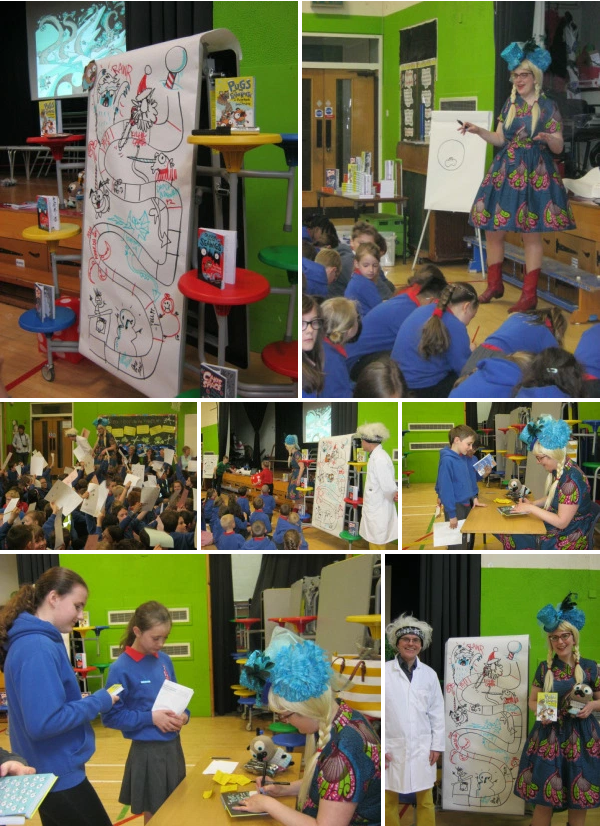
Last week many schools across Highland were lucky enough to have a visit from Sarah McIntyre, Children’s Author, for an interactive workshop on characterization, using her books as a stimulus. We had published this on the blog back in February to which many of our schools applied.

sm1

Over five days Sarah was able to deliver workshops to Mount Pleasant Primary School, Pennyland Primary School, Miller Academy Primary School, Melvich Primary School, Castletown Primary School, Noss Primary School, Watten Primary School, Knockbreck Primary School, Dornoch Academy, Strathpeffer Primary School, Mulbuie Primary School St Clement’s School, Kiltearn Primary School, Teanassie Primary School, Beauly Primary School, Drakies Primary School, Bun-sgoil Ghaidhlig Inbhir Nis, Crown Primary School, Hilton Primary School and Cradlehall Primary School.

This was a truly amazing geographical spread across the Local Authority.

SM2

The children involved commented on how well she engaged her audience, her use of voice in her books and her use of presentational devices to enhance her writing. This was a super opportunity for schools across Highland to have the chance to take part in.

If you missed your chance to take part in one of her events, you can access an event delivered by Sarah through the Scottish Book Trust: Author’s Live site. The event includes learning resources:
CLICK HERE – Sarah McIntyre: Authors Live