Using video to improve literacy…

tm

Another resource I’ve stumbled across whilst looking for literacy stimuli is ‘Teachers Media’. The website hosts thousands of videos which can be used for both lesson starters with pupils, and as individual CPD. Many of the videos were from Teachers TV. Click the picture above for a link to the website.

Thinking about how we can use video within the classroom; Ambleside Primary used it as a way of not only enhancing listening and talking, but also involving parents/carers. Worth a watch . . .

http://www.teachersmedia.co.uk/videos/using-video-to-improve-literacy

Ideas for the Summer Term!

teaching ideaspoetry archive

Click on the images above and you’ll find yourself at two very good websites recommended by Primary colleagues!  Teaching Ideas has a wealth of resources for all curricular areas.  If you hover over the Literacy tab you’ll find almost everything you need to inspire you this term.  I had a look at some of the videos and there are some excellent shorts that I’ll be using to stimulate storyline discussions with my Primary 6 class (my favourite is ‘Alma’ – a bit freaky but I like that!).  The Poetry Archive has a selection of poetry that children will love and also featured poets to get to know.

Here’s Alma for you to enjoy…don’t watch it with infant classes!

If you know of any resources out there that you can share, please let us know and we’ll post them here for everyone to enjoy!


April is…National Poetry Month

What a great way to start the summer term with a bit of poetry!  April is National Poetry Month and there are so many great resources out there to inspire our young poets.

One idea I found and plan on using is having a ‘Poem in Your Pocket’ day.  Simply pick a day and everyone finds a favourite poem to keep safe in their pocket.  During the day they share it with others, read it quietly, critique it and finally at the end of the day they can give their poem away to a friend. This could so easily move onto exploring song lyrics, their rhyme,  rhythm and implicit meanings which again is a great way to keep the boys hooked!

Here’s a powerful poem for older children (they sometimes don’t get the significance until they notice the date…)

The Garden

A little garden,
Fragrant and full of roses,
The path is narrow
And a little boy walks along it.

A little boy, a sweet boy,
Like that growing blossom.
When the blossom comes to bloom,
The little boy will be no more.

Franta Baas (1930-1944)

A couple of websites you might want to explore – lots going on here!

http://www.readingrockets.org/calendar/poetry/

http://teacher.scholastic.com/poetry/

This slideshow requires JavaScript.

Interactive Literacy

oo

Oxford Owl – heard of it? It’s a great resource which allows pupils, parents/carers and practitioners access to FREE e-books. The difference between Oxford Owl and RM books (mentioned in a previous post) is that Oxford Owl reads the book to you, complementing reading with comprehension games and activities.

Navigating around the website takes a few clicks – so click the image above which will take you to the freebies. Excellent for infant/middle stages, as well as supporting EAL learners and learners with dyslexia.

Could a small group use the book and activities within reading workshops?

What makes a good piece of writing?

This slideshow requires JavaScript.

Whilst evaluating the answer to the above question – I continually have the “Content vs Technical” debate. Do I want the piece to grip the reader’s attention, displaying the skill of a classic novelist? Or would I prefer for the piece to be presented with meticulous accuracy, resembling a complex lab report?

Surely – I want the piece to demonstrate strengths in both its content and its technical accuracy. However, does the way we currently teach writing marry these ideas together?

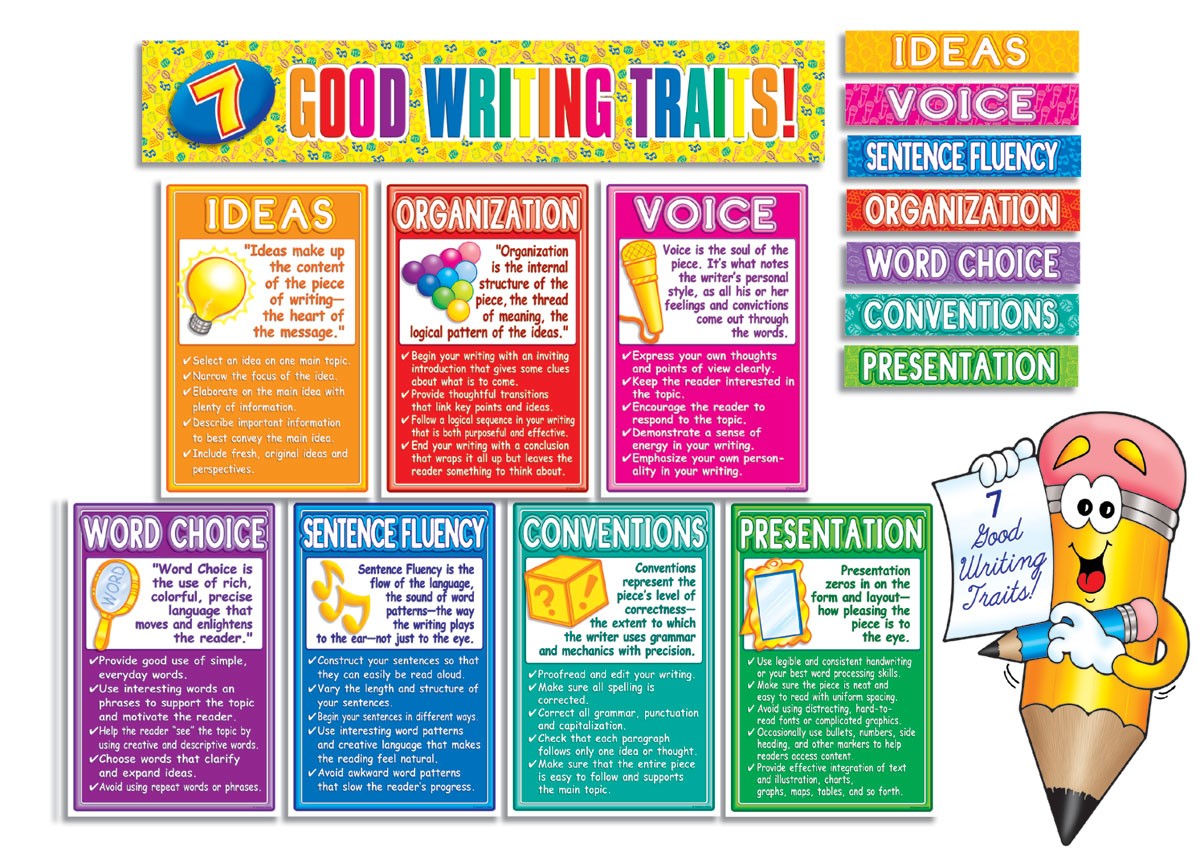
Schemes such as Big Writing have effectively improved the technical ability of writers, whilst developing the 4 core principles (Vocabulary, Connectives, Openers and Punctuation). But does it teach learners how to use their ‘voice’? Six Traits + 1 has a positive impact on developing ideas (voice being one of the embedded principles). Although can learners be taught spelling, punctuation and grammar through writing in this way?

Teaching That Makes Sense have developed guidance to support practitioners in developing the curriculum in America. They suggest that good writing begins with the writer having thoughts, which they transfer into ideas using their unique writer’s voice.

Something we often hear/ observe/ comment on is the fact that pupils often have difficulty generating ideas independently. Perhaps, as opposed to recommending a ‘Writing Scheme’, the Literacy Working Group  need to review what each scheme has to offer, sourcing a bank of resources which support ideas building, whilst providing guidance on learning, teaching and assessment in writing?

I recommend checking out the Teaching That Makes Sense website. A few of the documents I have found interesting can be found below:

What Is Good Writing

Be A Better Writer

What do YOU think makes a ‘good’ piece of writing?

More Media Ideas

moving image

Following on from the previous post about  ‘Using Media in Literacy’ click on the image above and you’ll find yourself at the Moving Image Education website.  This site has a host of quality video clips that can be used to develop children’s literacy skills. These are great to use and add a little variety to the texts we ask the children to view and think about.

Using film trailers is also a great way to start thinking about story lines and characterisation but the challenge is often finding films the children don’t actually know!  Using foreign films has worked well for me, have a look at one of my favourites:


Using media in literacy

Using media as a stimulus for Literacy and English is a way of engaging learners. I know that I can spend a lot of time trawling through websites for ‘just the right clip’ to use in my lesson.

The-Literacy-Shed-The-Literacy-Shed-Home

The Literacy Shed is an excellent resource which houses many animations, video clips and sound clips which can be used as a stimulus for learning.
Click on the image above to access the website.

My personal favourite is the video below; it is a great way of evoking emotive pieces of writing, and brilliant if you are studying WWII.

Try it out, and let us know what you think. If you know of any other resources which are similar, let us know.

An exciting writing opportunity for P4-P7

written worldI received an email from Kelsey Moore who is the Education Co-ordinator at Moniack Mhor Writers’ Centre and she’s keen to share things they’re up to so we can encourage our children to get involved.  They are holding NATURE AND WRITING WORKSHOPS for P4, P5, P6, P7 classes on 13-17 & 20-24 MAY 2013 in celebration of the Year of Natural Scotland 2013.  To find out more open the link below!

Written_World_2013[1]

Qualities of GOOD Writing

6 traitsSix-Traits-of-Writing-poster

There’s a lot of talk at the moment about ‘Big Writing’ and many schools out there are already working with the Ros Wilson materials.  Our Highland Literacy Group are keen to know what you think and if you know of any other good writing resources that might be of interest to others.  We’re keen to take a look at the 6 traits+1 materials (see the images above) and see what these have to offer.  We’ll let you know!