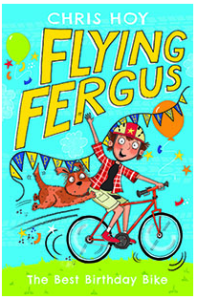
Sir Chris Hoy and co-author Joanna Nadin are part of a special Authors Live event this week, delivered by the Scottish Book Trust.
Chris and Joanna will be introducing their new cycling adventure series, Flying Fergus, on Thursday 17th March 2016 between 11am and 11.40am. This event has a target age of P2 – S1.
To support this Authors Live event, the Scottish Book Trust have published learning resources to support the development of literacy and sport.
For those that are keen to get involved, let us know how your class further develop what they learn from the event by leaving a comment on this blog post.
Last week at the ‘Closing the Vocabulary Gap’ twilight presented by Rebecca Castelo (Speech and Language) and Kirstine Mullin (Glenurquhart Primary School), it was great to see theBuilding Vocabulary for Better LiteracyPowerPoint in action.
In our previous post on Pre-Teaching Vocabularywe shared how the Pip St. John resource can be used to support the development of Oral Language skills, in turn contributing to the narrowing of the vocabulary gap.
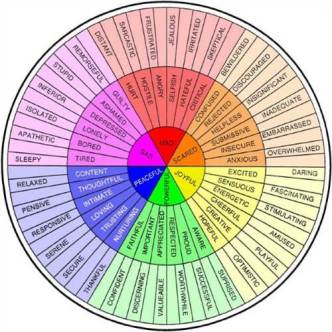
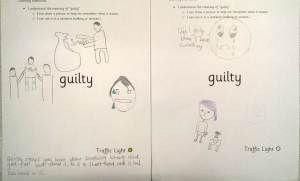
Kirstine shared how she has used the materials to support the teaching of vocabulary around emotional literacy in her P5/6 class, much of the vocabulary first seen as abstract by the learners. Through the development of Pre-Teaching Vocabularyin her classroom, the understanding of language and expressive language skills of her learners have developed. This is one great example of how the materials can be used to support the development of Oral Language.
Due to high demand the Inverness training was at full capacity. The twilight will run again in Dingwall on Thursday 21st April 2016. This can be applied for through the CPD Calendar.
Develop core Literacy skills such as sharing opinions, finding evidence, reaching consensus and analysing sources through Global Citizenship using the Positive Development Stories Photo Teaching Resource.
This can be used alongside materials from the Higher Order Thinking Skills (HOTS) tab, or through looking through some of our previous posts on discussion skills.
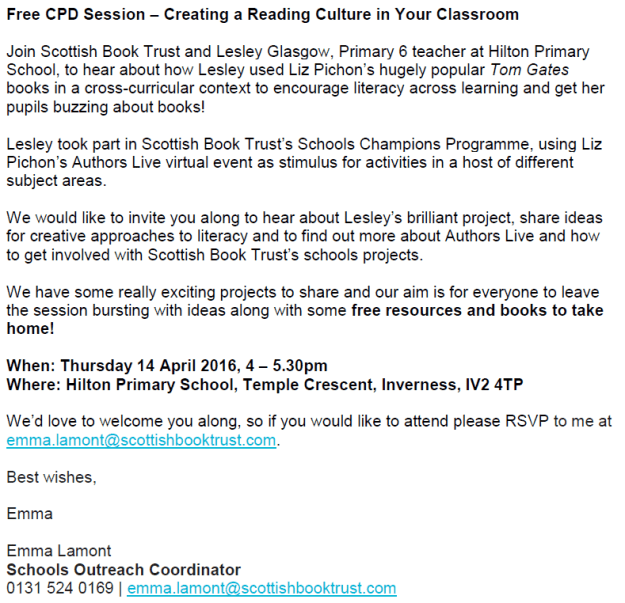
Hilton Primary School, Inverness, have done some great work with the Scottish Book Trust. Following this, the Scottish Book Trust are offering CPD training for practitioners in Highland on Thursday 14th April 2016, 4pm – 5.30pm.
To book contact: emma.lamont@scottishbooktrust.com
Find out what Hilton have been up to below . . .
At Hilton Primary in Inverness both of the P6 classes have been taking part in a project inspired by the books and videos of Liz Pichon.
This introduced all of the children to the world of Tom Gates. It was an extremely engaging and interactive session as the children had clipboards and paper to follow Liz’s doodling instructions.
During the next session we watched ‘The Brilliant World of Tom Gates’ as a lead into reading the book.
We followed the very natural progression of the book and focussed on the main themes of doodling, music and comics.
Doodling
We made a string doodle using a piece of string to make a shape, maybe a snail or a monster, and then we added doodles.
We created a Tom Gates style wall on frieze paper/bookcase in classroom/ school library.
The children developed their doodling techniques – Comic Capers (half a jotter which has a mix of plain/lined pages) for 10 -15 minutes daily to note ideas and to practise doodles.
Then they doodled themselves as a character within Tom Gates. They annotated the drawings as Liz does with the characters in her books. The pictures were then added to the Tom Gates wall to create a gallery.
We watched the cooking verbs video clip in preparation for writing our own Granny Mavis style recipes.
We used pages 98-104 from ‘A Little Bit Lucky’ about the pizza toppings as a stimulus.
Then we had a go at making unusual – yet palatable – pizzas. We wrote the pizzas up as recipe cards using ‘cooking verbs’ and displayed them (or you could make a pizza compilation book).
The children used their doodling skills to design a Tom Gates type t-shirt for their rock band.
They all took part in a competition to design a new cover for the next Tom Gates book (as Liz had become too busy to design her own!)
Music
The class listened to, learned and performed Dog Zombie’s version of Delia’s a Weirdo
They created a band identity through posters and t-shirts.They then produced, learned and performed their own song in their band
The children investigated the layout and information in music magazines e.g. Rocksound, Kerrang
They enjoyed creating their own review about their band as part of class rock magazine.
Comics
Comic Capers – Build up ideas, doodling experience in Comic Capers books. The children spent 10-15 minutes daily using lined and blank exercise jotters. The children asked that we keep this activity going after the project.
Then we watched a video clip about producing comics
We spent time with our class looking at comic strip formats either from the Dandy and The Beano, or Oor Wullie.
The Tom Gates series is written in the epistolary style which can include letters, other documents and often diary entries. An additional activity could be to compare and contrast Tom Gates with Diary of a Wimpy Kid. Look for any similarities in the style: first person, irreverence, friendships and rivalries, etc. What is different? Can you tell they are written by different authors and if so, how? What are the clues? Which do they prefer and why? Encourage debate and split the learners into two groups each advocating the superiority of one or other of the novels.
Tom Gates Day
Bringing together the activities already covered by the children, the day comprised of;
Songs being performed
Comics/ Music Magazines to view
Competition winners announced
Pizzas cooked using recipe cards
Excerpt read from latest Liz Pichon book
Children dressed up in t-shirts and wearing character masks
Doodle activities/games from Scholastic fun stuff website
Quiz
As a result of the Authors Live broadcast and the follow up activities, the children have gone on to become huge fans of the Tom Gates series. Many of the children have now got their own copies of the series of books and we have been asked to add collections of books to the school’s reading resources.
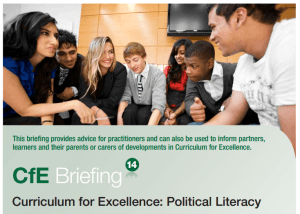
Click the image below to check out the Political Literacy briefing paper from Education Scotland. The paper outlines the use of Political Literacy to develop Higher Order Thinking Skills (HOTS) and debate.
It is now over a year since many schools across Highland began using Speedy Readers to support learners.
The video above has been created by an Australian school to show how they’re using The Literacy Toolbox – Speedy Readers, striving to combat illiteracy.
Charleston Academy, Inverness, made a great video on their work with the software:
We’re looking for enthusiastic practitioners who use Speedy Readers – The Literacy Toolbox to share the following:
One five second clip of the front of the school, focusing mainly on the sign on which the name of the schools appears.
Two 15 second over-the-shoulder shots of a child reading to an adult from a Toolbox printout.
Two 15 second over-the-shoulder shots of a child working at a computer on a Toolbox exercise.
A shot of around one minute of a teacher explaining which year groups s/he teaches and what its impact has been.
If interested, please email attachments to: eddiecarron@btconnect.com
We’d appreciate if you could spare less than one minute to click the link below, choose your school and answer one question about the Emerging Literacy materials. The Emerging Literacy group are in the process of refining the Emerging Literacy materials and training and your feedback will be extremely valuable.
Left inspired by one of the writing workshops which we delivered to the Highland Probationers on Saturday, it left me thinking, how are we creating a love for writing in our classrooms?
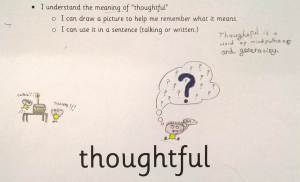
Journaling is a creative technique which draws together the skills of reading and writing, combined with artistic flair.
After using choral reading to read the poem Warning by Jenny Joseph, focusing on the punctuation to aid the flow, our practitioners disected each stanza to infer meaning. Poetry is a powerful genre which is a great stimulus for writing, often short it’s a genre which we can use to inspire thinking when we’ve got a few minutes before assembly, after lunch or within an extended writing lesson. CLICK HERE – Poetry Archive
Following this, our practitioners used the journaling approach to create visual representations of themselves as practitioners in the year 2046, linked to the theme of the poem.
It’s that time of year again where teachers all around plan for a day of reading immersion to ensure that our children and young people leave us with a love of reading. The World Book Day Website has been redesigned and is now more user friendly than ever, allowing you to get to the information you require quickly.
The World Book Day Toolkitis the starting point for all practitioners. Access this by clicking the image below.
For age/stage specific resources, click the images below:
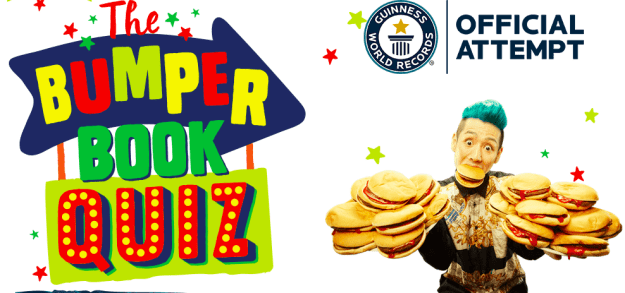
Join in on The Bumper Book Quiz by clicking the image below. The resource goes live tomorrow, Tuesday 23rd February.
Let us know what you’re up to on World Book Day by leaving a comment; we’d love to share the work that you’re doing!

 Chris and Joanna will be introducing their new cycling adventure series, Flying Fergus, on Thursday 17th March 2016 between 11am and 11.40am. This event has a target age of P2 – S1.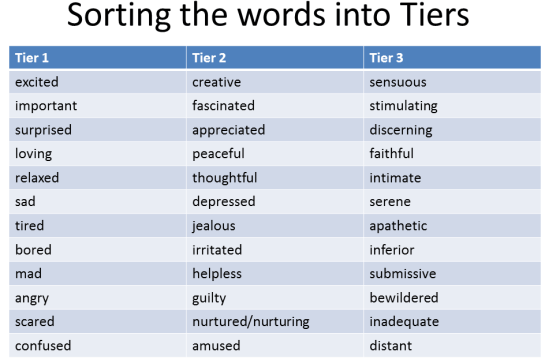









 HIGHLAND LITERACY