Author Archives: Mr Cook

Using video to improve literacy…

tm

Another resource I’ve stumbled across whilst looking for literacy stimuli is ‘Teachers Media’. The website hosts thousands of videos which can be used for both lesson starters with pupils, and as individual CPD. Many of the videos were from Teachers TV. Click the picture above for a link to the website.

Thinking about how we can use video within the classroom; Ambleside Primary used it as a way of not only enhancing listening and talking, but also involving parents/carers. Worth a watch . . .

http://www.teachersmedia.co.uk/videos/using-video-to-improve-literacy

Interactive Literacy

oo

Oxford Owl – heard of it? It’s a great resource which allows pupils, parents/carers and practitioners access to FREE e-books. The difference between Oxford Owl and RM books (mentioned in a previous post) is that Oxford Owl reads the book to you, complementing reading with comprehension games and activities.

Navigating around the website takes a few clicks – so click the image above which will take you to the freebies. Excellent for infant/middle stages, as well as supporting EAL learners and learners with dyslexia.

Could a small group use the book and activities within reading workshops?

What makes a good piece of writing?

This slideshow requires JavaScript.

Whilst evaluating the answer to the above question – I continually have the “Content vs Technical” debate. Do I want the piece to grip the reader’s attention, displaying the skill of a classic novelist? Or would I prefer for the piece to be presented with meticulous accuracy, resembling a complex lab report?

Surely – I want the piece to demonstrate strengths in both its content and its technical accuracy. However, does the way we currently teach writing marry these ideas together?

Schemes such as Big Writing have effectively improved the technical ability of writers, whilst developing the 4 core principles (Vocabulary, Connectives, Openers and Punctuation). But does it teach learners how to use their ‘voice’? Six Traits + 1 has a positive impact on developing ideas (voice being one of the embedded principles). Although can learners be taught spelling, punctuation and grammar through writing in this way?

Teaching That Makes Sense have developed guidance to support practitioners in developing the curriculum in America. They suggest that good writing begins with the writer having thoughts, which they transfer into ideas using their unique writer’s voice.

Something we often hear/ observe/ comment on is the fact that pupils often have difficulty generating ideas independently. Perhaps, as opposed to recommending a ‘Writing Scheme’, the Literacy Working Group  need to review what each scheme has to offer, sourcing a bank of resources which support ideas building, whilst providing guidance on learning, teaching and assessment in writing?

I recommend checking out the Teaching That Makes Sense website. A few of the documents I have found interesting can be found below:

What Is Good Writing

Be A Better Writer

What do YOU think makes a ‘good’ piece of writing?

Using media in literacy

Using media as a stimulus for Literacy and English is a way of engaging learners. I know that I can spend a lot of time trawling through websites for ‘just the right clip’ to use in my lesson.

The-Literacy-Shed-The-Literacy-Shed-Home

The Literacy Shed is an excellent resource which houses many animations, video clips and sound clips which can be used as a stimulus for learning.
Click on the image above to access the website.

My personal favourite is the video below; it is a great way of evoking emotive pieces of writing, and brilliant if you are studying WWII.

Try it out, and let us know what you think. If you know of any other resources which are similar, let us know.

Talk the Big Talk

Talk the Big Talk, a precursor to Big Writing, puts emphasis on the importance of talk, particularly in the early years, to enhance the writing process.

Talk the big talkUsing the core Big Writing principles of Vocabulary, Connectives, Openers and Punctuation, (VCOP) early years practitioners can use the power of talk within their writing sessions. Ros Wilson (founder of Big Writing) believes that:

‘If a child can’t say it, a child can’t write it.’

Up-levelling- the skill of improving sentences through the use of ambitious vocabulary, varied connectives, powerful openers and punctuation. Allowing learners to develop the concept of VCOP orally, will in turn influence their ability to transfer their skills into their writing. Click on the links below for ideas of how to use VCOP in the classroom.
sentenceplay.co.uk – CLICK HERE!
VCOP Ideas Bank- CLICK HERE!
VCOP – Year 1 ideas- CLICK HERE!

In addition to this, ‘Talk Homework’ is at the core of Big Writing/Big Talk sessions. Some ideas for Talk Homework can be found below:
Talk Homework Ideas- CLICK HERE!

If you use ‘Talk the Big Talk’ in your classroom, and have any learning and teaching ideas, we’d love to hear from you.

What’s in the news?

Developing the skills of listening and talking within the classroom, whilst increasing an awareness of current affairs, seems only natural.

tdw

To be considered Global Citizens, I strongly believe that learners need to have an awareness and appreciation of what is going on around them, encouraging critical thinking. One way to extract their opinions is the use of current affairs within the news. Resources such as Newsround and The Daily What are excellent ways of engaging learners in dialogue about what is going on around them.

Through co-operative strategies – using listening/summarizing as a core focus – learners can give their opinions on current affairs, whilst learning to respect the differing opinions of others.

Want to extend the use of current affairs into writing? Why not teach learners how to write a critical response to a topic/statement, developing their research skills.
e.g- Nuclear Power is the energy resource of the future.

eBooks- a resource for the classroom

Those of you who are fortunate enough to have either an interactive whiteboard or projector in your room- this will be of interest to you.

rm3          RMBooks          rm2

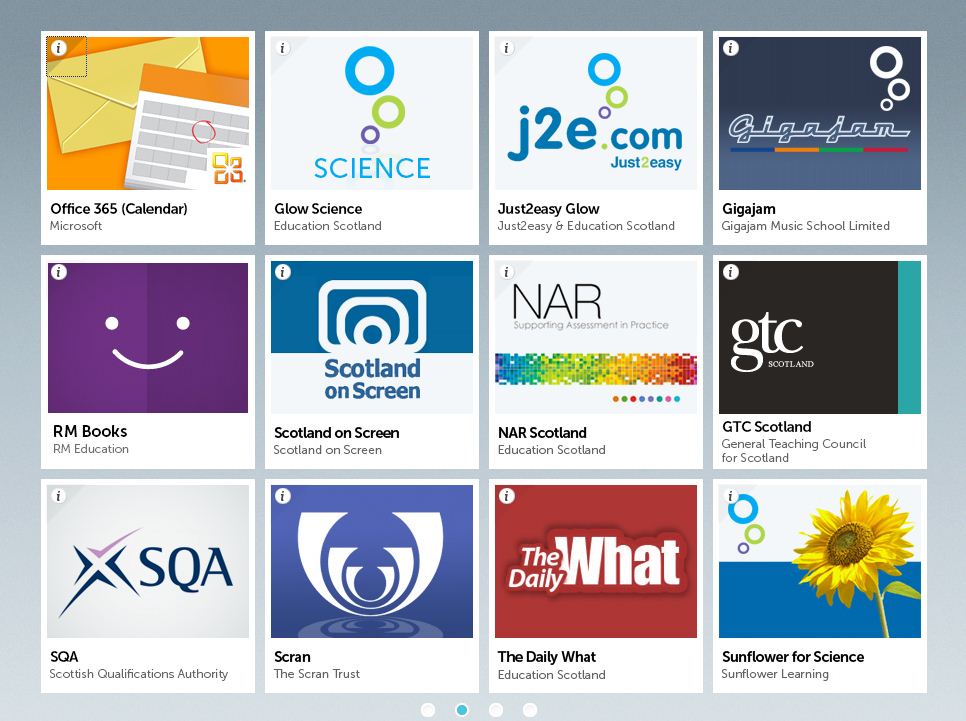
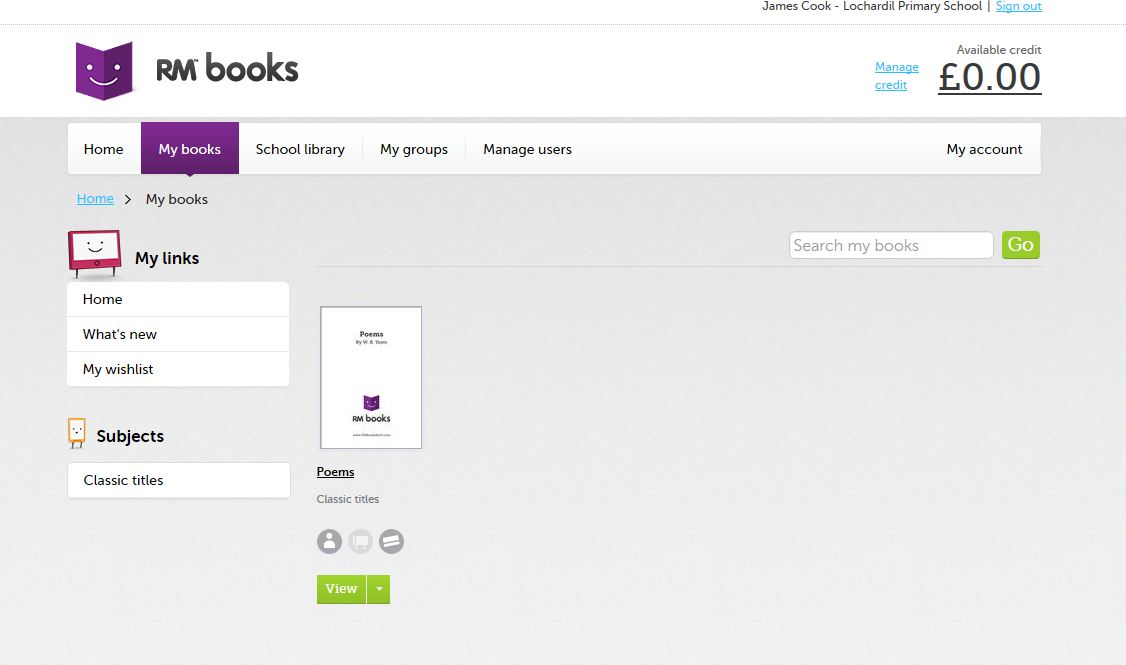
Glow, now serviced by RM Unify, decided that tiles were the way forward in enabling users to access information quickly. A new tile ‘RM Books’ is one in which I discovered last week. Each teacher with a Glow account can download books which can then be used for whole class/group lessons – ideal for Reading for Information and Writer’s Craft.

Clicking on the ‘School Library’ I was able to access 69 FREE books which can be used. I would suggest however that these resources are perhaps more relevant to second level (CfE) and above.

I am itching to use the free Yeats’ poetry book to demonstrate classic poetry and ballads. You may need to speak to the Glow administrator for your school if you experience problems in logging into your account – however I’d definitely recommend checking it out.

https://www.rmbookshelf.com/

Be daring… let go of the reins!

This slideshow requires JavaScript.

Literature Circles – a structured method of delivering Reading for Enjoyment, whilst teaching learners how to think, be accountable for their learning, in addition to embracing the embedded CfE principle of ‘Enjoyment and Choice’. Click on the blue links throughout to find out more.

What are Literature Circles?
Literature circles are formed within your classroom, allowing pupils to choose the book they read, from a selection of 3/4 books. Groups are then established from their choice of book. Each week (it is suggested you have 1 session a week) pupils decide as a group how much they read for the next session. Ensuring the session has a structure – giving pupils roles and responsibilities – learners are able to had an in-depth discussion in which they are all accountable for.

Strathclyde University, on behalf of the Scottish Government, conducted research (2005) on the effectiveness of literature circles within the classroom. They found that:
1. Literature circles encouraged learners to take responsibility for their own learning
2. Learners, using the roles given, were able to analyse the text
3. Boys were increasingly engaged in reading for enjoyment
4. Pupils wanted to create their own literature circles
Literature Circles, Gender and Reading for Enjoyment

Within my classroom, in conjunction with the use of Bloom’s taxonomy, I have found literature circles an active way of promoting leadership of learners within the classroom, putting an emphasis on pupil talk over teacher talk.

Have you used literature circles in your classroom? If so, we’d love to hear your advice on how to perfect literature circles.

21st Century Literacy!

Access to an iPad? If so, this post is for you…

This slideshow requires JavaScript.

Whilst we live in an age of multi-media, where visuals and audio seem to be dominant in every day life, text is not going away! Supporting literacy, whilst encompassing technological developments, the use of an iPad can engage learners demonstrating that literacy is FUN!

Teach Mama wrote a blog post in December suggesting iPad apps which can be used within the classroom, and at home to enhance literacy learning. Typing ‘literacy’ into the App Store, we’ve found a few of our own which we’d also like to recommend. The following apps are currently FREE in the App Store:

Word Mover – Learners are able to build poems and prose using sequences of common words, in addition to expanding their vocabulary with unfamiliar words.

Wordball – A resource ideal for 1st/2nd level of CfE in which learners can create words against the clock from the letters given.

Fun Rhyming – The clue is in the title- using phonic knowledge, learners identify words using the given sound.

SB Spelling – A great spelling resource- learners can input their own spelling list; using the principles of ‘Look, Say, Cover, Write, Check’ they can revise their spelling words, using an interactive and engaging approach to learning.

Treasure Hunt – An interactive game in which learners use their literacy skills to solve problems.

Build A Story – Wanting to engage learners in writing? This resource is an interactive method of creating texts using visual stimuli such as images/animations, in conjunction with written text.

iBooks – Texts can be downloaded for Reading for Enjoyment. There are many ‘read aloud’ texts also available for free within the App Store- type ‘literacy’ to explore. Kindle- is a similar resource you may want to check out.

We’d like to know your thoughts of using technology to support literacy both within the classroom, and at home.

Working towards creativity…

This slideshow requires JavaScript.

Following on from the previous post about creativity, click below for a Bloom’s taxonomy resource which can be used to develop thinking in the classroom.
Bloom-Question-Fans

Visit the blog below- they’ve also suggested ways in which Bloom’s taxonomy can be used in the classroom:
http://thoughtweavers.wordpress.com/2011/05/22/using-blooms-taxonomy-in-the-classroom/