


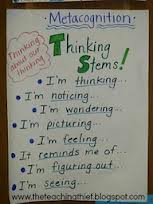
I found this great resource on the teacherspayteachers site and it has some good sentence starters/stems to help children when responding to literature. Click below to download them and let us know if they are of any use!

I found this great resource on the teacherspayteachers site and it has some good sentence starters/stems to help children when responding to literature. Click below to download them and let us know if they are of any use!

There are many great resources out there that support reading development. ‘Trugs’ is one we thought we’d try and have to say it’s great! Our P2-P7 children have been playing the games and love them! Click on the image above and you’ll find yourself on the Read Successfully website where you can find out more (the video clips on the site are a good place to start).
Talk the Big Talk, a precursor to Big Writing, puts emphasis on the importance of talk, particularly in the early years, to enhance the writing process.
 Using the core Big Writing principles of Vocabulary, Connectives, Openers and Punctuation, (VCOP) early years practitioners can use the power of talk within their writing sessions. Ros Wilson (founder of Big Writing) believes that:
‘If a child can’t say it, a child can’t write it.’
Up-levelling- the skill of improving sentences through the use of ambitious vocabulary, varied connectives, powerful openers and punctuation. Allowing learners to develop the concept of VCOP orally, will in turn influence their ability to transfer their skills into their writing. Click on the links below for ideas of how to use VCOP in the classroom.
sentenceplay.co.uk – CLICK HERE!
VCOP Ideas Bank- CLICK HERE!
VCOP – Year 1 ideas- CLICK HERE!
In addition to this, ‘Talk Homework’ is at the core of Big Writing/Big Talk sessions. Some ideas for Talk Homework can be found below:
Talk Homework Ideas- CLICK HERE!
If you use ‘Talk the Big Talk’ in your classroom, and have any learning and teaching ideas, we’d love to hear from you.
Developing the skills of listening and talking within the classroom, whilst increasing an awareness of current affairs, seems only natural.

To be considered Global Citizens, I strongly believe that learners need to have an awareness and appreciation of what is going on around them, encouraging critical thinking. One way to extract their opinions is the use of current affairs within the news. Resources such as Newsround and The Daily What are excellent ways of engaging learners in dialogue about what is going on around them.
Through co-operative strategies – using listening/summarizing as a core focus – learners can give their opinions on current affairs, whilst learning to respect the differing opinions of others.
Want to extend the use of current affairs into writing? Why not teach learners how to write a critical response to a topic/statement, developing their research skills.
e.g- Nuclear Power is the energy resource of the future.

Click on the image above and you’ll find yourself on the TED website which has a wealth of amazing video clips (mostly for second level and beyond) that can be used for teaching those big ideas that children often find tricky. I love this video, it’s a great one to use in Writing or Reading Workshop to get the children making connections!
Speaking to a few early level colleagues, they’re looking for some new ideas to revitalise what they are already doing in reading and writing. Here are some images that take what we teach the little ones but present it in perhaps a new way! If you know of someone in your school who is doing something interesting with literacy, then let us know and we’ll post it on the blog!
A friend of mine came across this site and it has some great ideas for sensory spelling experiences for children of all ages! Check it out and see what you think: http://www.momto2poshlildivas.com/2012/10/75-fun-ways-to-practice-and-learn.html
Those of you who are fortunate enough to have either an interactive whiteboard or projector in your room- this will be of interest to you.

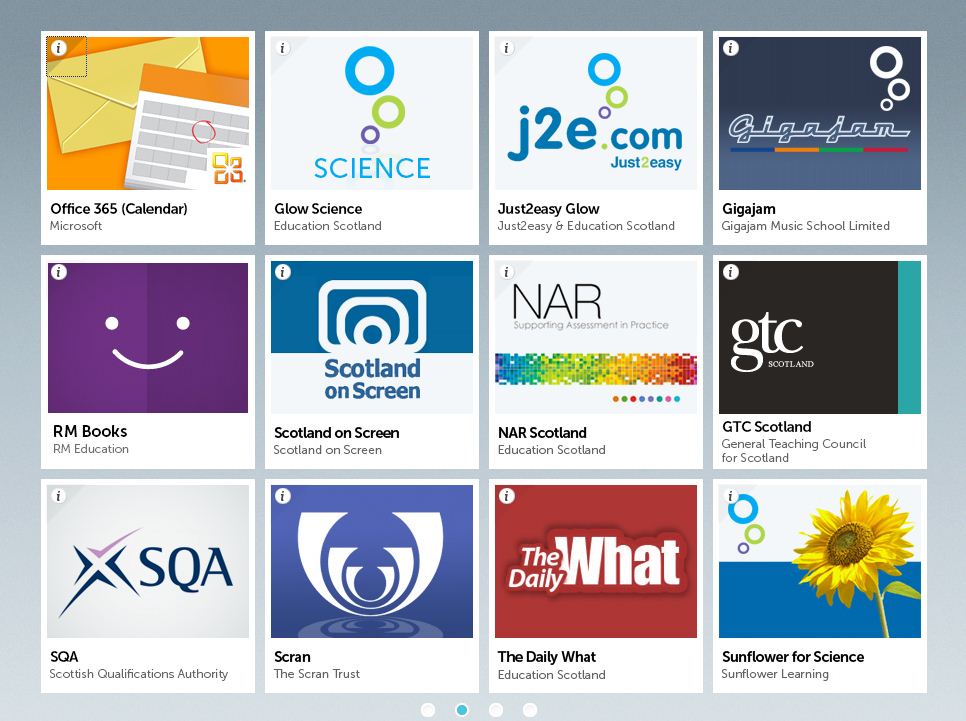
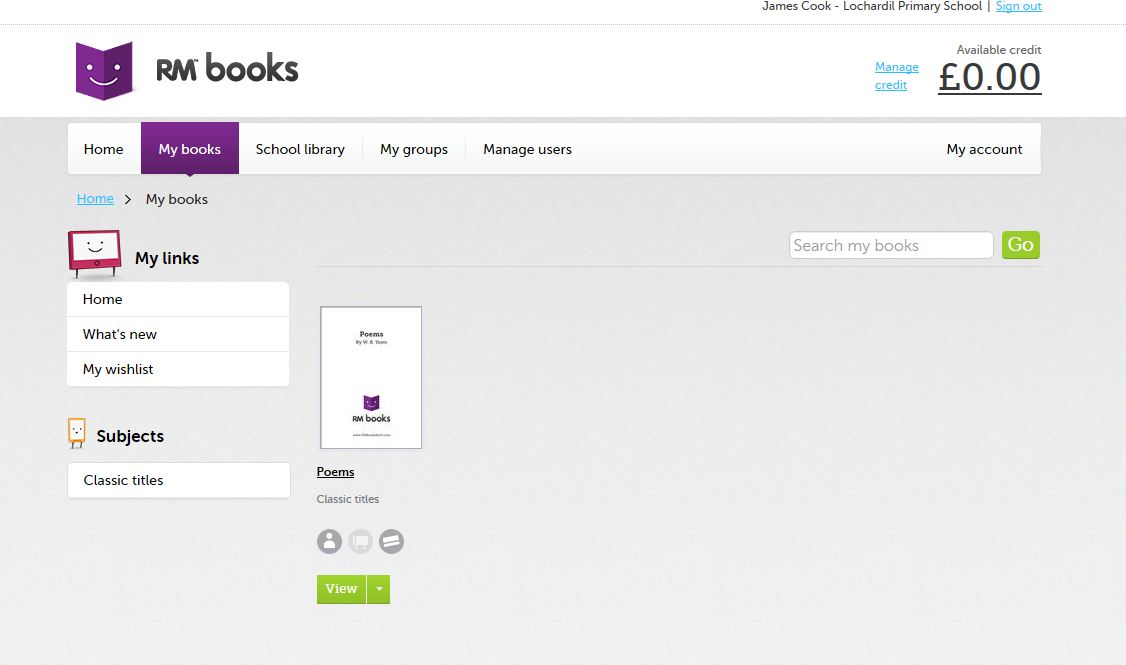
Glow, now serviced by RM Unify, decided that tiles were the way forward in enabling users to access information quickly. A new tile ‘RM Books’ is one in which I discovered last week. Each teacher with a Glow account can download books which can then be used for whole class/group lessons – ideal for Reading for Information and Writer’s Craft.
Clicking on the ‘School Library’ I was able to access 69 FREE books which can be used. I would suggest however that these resources are perhaps more relevant to second level (CfE) and above.
I am itching to use the free Yeats’ poetry book to demonstrate classic poetry and ballads. You may need to speak to the Glow administrator for your school if you experience problems in logging into your account – however I’d definitely recommend checking it out.
Thinking about my plans for next week and all the reading I’ve been doing recently on Literacy I decided to see if I am really managing to implement a balanced literacy program in my P6 classroom… To have a balance we need the following:
As you plan for next week, take a moment to see if you manage to explore each of the ideas listed above. For me it’s been a good reminder of what matters and now my challenge is to be as creative as I can with the time I have as I certainly don’t want to miss anything out!
Literature Circles – a structured method of delivering Reading for Enjoyment, whilst teaching learners how to think, be accountable for their learning, in addition to embracing the embedded CfE principle of ‘Enjoyment and Choice’. Click on the blue links throughout to find out more.
What are Literature Circles?
Literature circles are formed within your classroom, allowing pupils to choose the book they read, from a selection of 3/4 books. Groups are then established from their choice of book. Each week (it is suggested you have 1 session a week) pupils decide as a group how much they read for the next session. Ensuring the session has a structure – giving pupils roles and responsibilities – learners are able to had an in-depth discussion in which they are all accountable for.
Strathclyde University, on behalf of the Scottish Government, conducted research (2005) on the effectiveness of literature circles within the classroom. They found that:
1. Literature circles encouraged learners to take responsibility for their own learning
2. Learners, using the roles given, were able to analyse the text
3. Boys were increasingly engaged in reading for enjoyment
4. Pupils wanted to create their own literature circles
Literature Circles, Gender and Reading for Enjoyment
Within my classroom, in conjunction with the use of Bloom’s taxonomy, I have found literature circles an active way of promoting leadership of learners within the classroom, putting an emphasis on pupil talk over teacher talk.
Have you used literature circles in your classroom? If so, we’d love to hear your advice on how to perfect literature circles.
 HIGHLAND LITERACY