
At the Starcatchers creativity event last week there were a variety of presentations and workshops within the Early Years and school age context that explored instilling Creativity in education.
In the Education Scotland presentation, they highlighted Creativity as providing opportunities for Divergent Thinking.
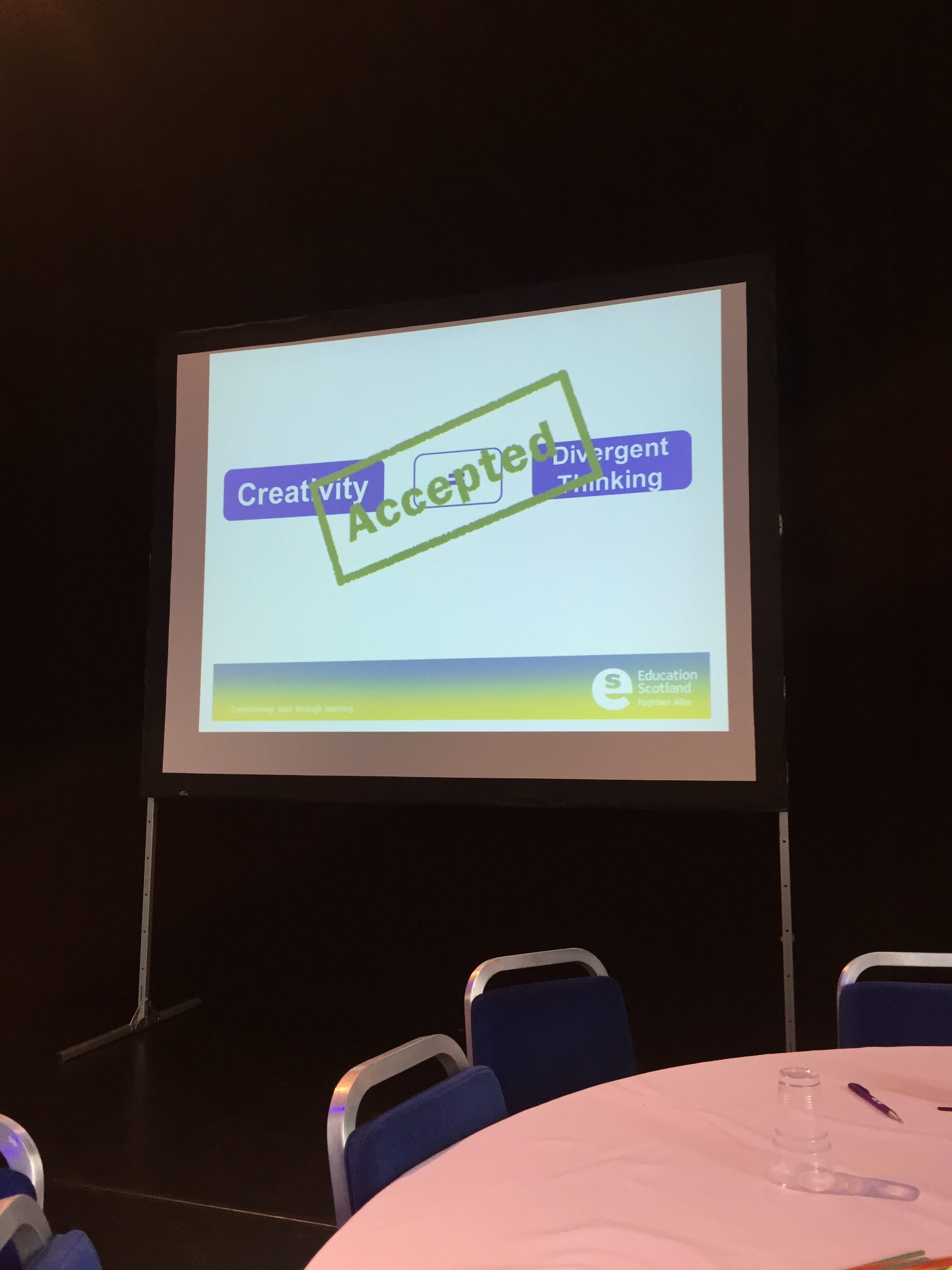
In the release of Steps to Success – The Highland Literacy Progression the Highland Literacy progression, we have highlighted that the Sub-SAL ‘develop and use higher order thinking skills’ permeates throughout the Literacy Experiences and Outcomes. It was highlighted at the event that Creativity should permeate throughout the curriculum.
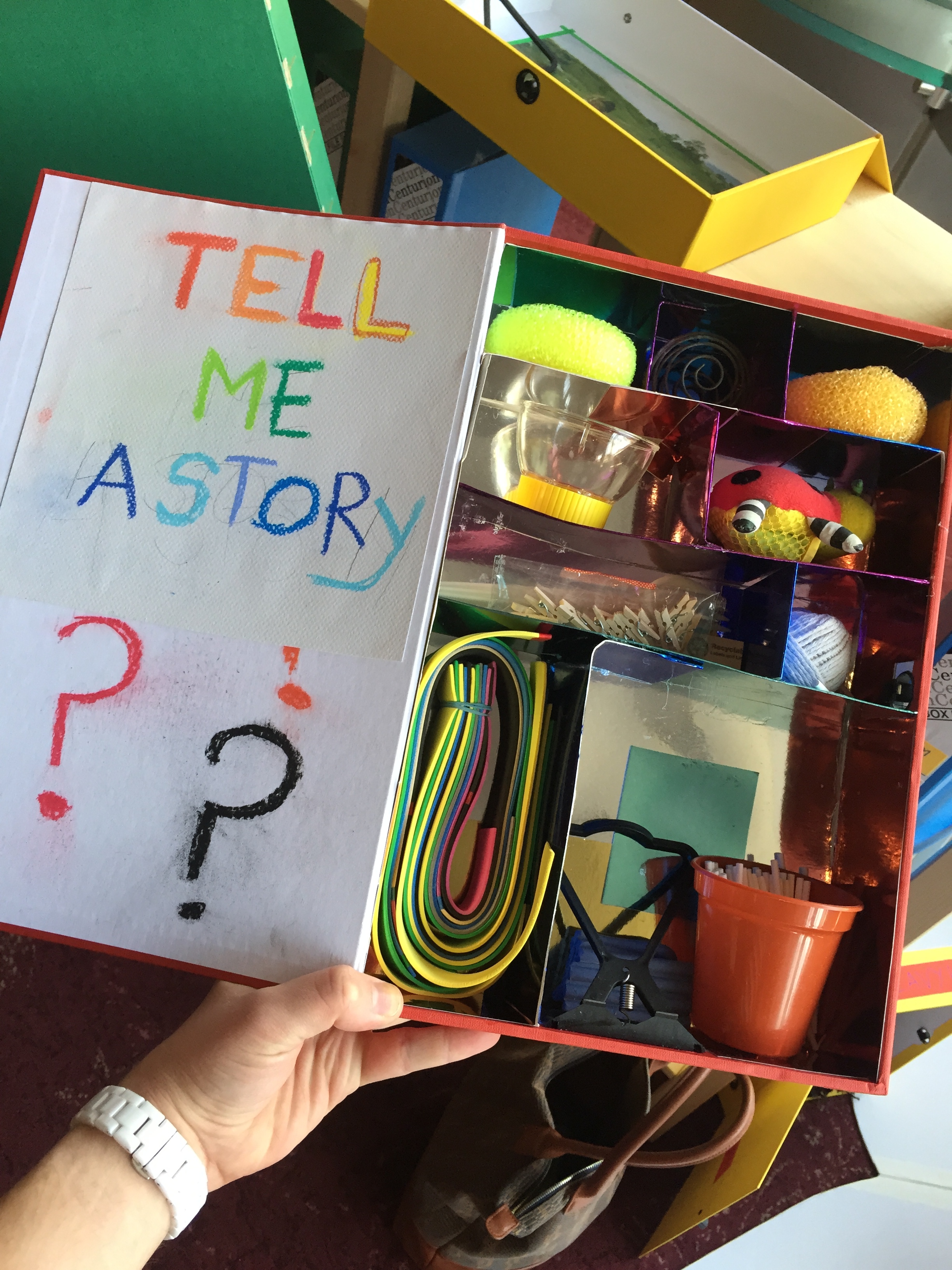
One idea which we saw was this clever box-file concept – the perfect opportunity for developing a ‘provocation to talk’ lesson which could support the creation of oral and written texts. Set these up in your classroom and allow your learners to think . . . to create.
This box-file in particular is a great way to get learners talking and creating texts:
Ramsey Musallam presented a TED Talk where he shared ‘3 rules to spark learning’. Curiosity, Trial and Error, Reflection – all three are key to embedding creativity in our learning environments.
CLICK HERE for the ‘Creativity Across Learning’ report from Education Scotland
What opportunities do you provide for learners to explore Literacy through creativity?






 past two sessions, The Highland Literacy Group have been refreshing the support materials available to practitioners. We have updated our Probationer programme accordingly for the 2014/2015 session, and would like to offer supplementary training to complement the original HLP training programme. We are running an event called ‘Literacy Across Learning – Primary‘ on the
  Reflective Reading (formally known as ‘Muckle Reading’) – an approach to teaching reading which aims to develop Higher Order Thinking skills in reading through encompassing the Significant Aspects of Listening and Talking, Reading and Writing – delivered by Anne Glennie (former Andrell Education Consultant – now The Learning Zoo). The course is full of ideas that can be brought straight back to the classroom. This is an approach that could be used to complement the HLP reading methodologies, building on the good practice in Highland schools.
 Little Big Writing is a strategy for children who are not yet writers. It is an on going planned strategy to develop and enhance pupils’ language skills. It draws on the principles of Big Writing and allows the child to progress naturally into First Level (CfE). Big Writing is a teaching methodology in which pupils learn and develop the ideas, vocabulary and higher level grammatical structures needed to improve their writing almost entirely through talk.
 HIGHLAND LITERACY